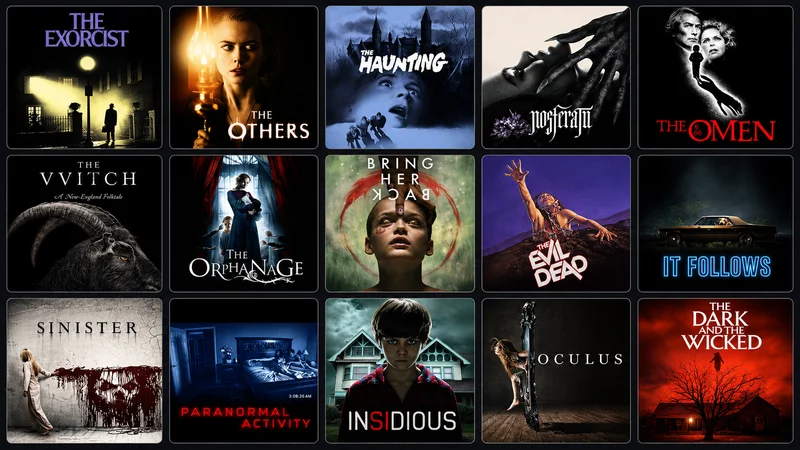
The best paranormal horror movies make ordinary life feel vulnerable to forces no one can see or control. A distant knock, a seemingly harmless family heirloom, or a voice coming from an empty room can be more disturbing than a visible attacker. This Top 35 gathers unforgettable hauntings, supernatural curses, possessions, occult mysteries, and modern ghost stories from different decades and countries.
At ReelShort, we explore screen entertainment through distinctive stories and memorable characters. These recommendations are feature films made by independent filmmakers and various studios, not productions owned or distributed by this website. Some are restrained ghost mysteries, while others feature frightening possessions, graphic violence, or intense psychological distress. You can choose a film that suits your own appetite for fear.
Our guide to the best paranormal horror movies offers 35 selections with a short genre profile, viewing mood, and a specific reason to watch. We favor films where ghosts, spirits, demonic activity, or mysterious supernatural forces drive the conflict. The commentary avoids major ending spoilers, and we distinguish the original release or festival year from a later theatrical release when that difference matters.
What Makes Paranormal Horror So Frightening?
- Invisible threats: Ghosts and unexplained presences can turn familiar spaces into places of uncertainty.
- Rules and rituals: Cursed objects, séances, religious ceremonies, and local beliefs give each haunting its own logic.
- Emotional weight: Grief, guilt, family secrets, and isolation often shape the supernatural danger.
- Different intensities: Quiet haunted-house suspense sits beside violent possession and occult body horror.
- International perspectives: Asian spirit stories, European gothic mysteries, and American supernatural thrillers use distinct traditions.
The best paranormal horror movies do not need to prove whether spirits exist outside fiction. Their power comes from making the impossible feel emotionally credible within the story. The numbered selections below are grouped by experience rather than ranked through invented ratings, and each movie offers a different kind of encounter with the unknown.
Classic Haunted Houses and Ghostly Mysteries
Several of the best paranormal horror movies create terror from a single location and the possibility that its history has never really ended. These nine films emphasize atmosphere, unfinished business, and the fragile line between what characters believe and what they witness.
1. The Haunting (1963)
- Subgenre: Gothic haunted-house mystery
- Mood: Suggestive, claustrophobic, disorienting
- Ideal for: Fans of subtle, sound-driven scares
A small group gathers at Hill House to investigate its disturbing reputation. Director Robert Wise uses strange camera angles, unseen noises, and the building’s confusing layout to make a room feel dangerous without showing a reliable monster. Eleanor, one of the visitors, becomes increasingly attached to the house even as it seems to threaten her.
The ambiguity makes the film more durable than a simple ghost hunt. Viewers are invited to consider whether the building has a will of its own and how isolation shapes Eleanor’s perceptions. Its patient style is ideal for anyone who likes to feel unsettled by an empty doorway rather than a sudden on-screen attack.
2. The Innocents (1961)
- Subgenre: Psychological gothic ghost story
- Mood: Delicate, repressed, deeply uneasy
- Ideal for: Viewers who enjoy ambiguous hauntings
A governess arrives at a secluded estate to care for two children and becomes convinced that malevolent influences are surrounding them. Deborah Kerr’s increasingly distressed performance gives the film a human center, while black-and-white compositions make faces and distant figures difficult to read. The children are both vulnerable and strangely difficult to understand.
Adapted from Henry James’s The Turn of the Screw, the movie refuses to make supernatural certainty easy. It is frightening partly because the governess believes she is protecting the children. Choose it for a haunting where conviction itself may be dangerous, and where interpretation continues long after the final scene.
3. The Changeling (1980)
- Subgenre: Grief-centered haunted-house mystery
- Mood: Mournful, investigative, ominous
- Ideal for: Old-fashioned ghost-story enthusiasts
Following a family tragedy, composer John Russell moves into an enormous old house where unexplained disturbances draw him toward a buried mystery. The film makes ordinary objects, including a bouncing ball, feel like messages from someone who cannot speak directly. Its supernatural activity gradually asks the protagonist to investigate a past injustice.
Unlike haunted-house movies built around escalating destruction, this one treats the ghost as part of a mystery with emotional consequences. George C. Scott grounds the investigation in recognizable grief. Watch it when you want a classical, carefully paced haunting that gives the sounds and spaces of an old home real dramatic weight.
4. Poltergeist (1982)
- Subgenre: Suburban paranormal spectacle
- Mood: Playful at first, increasingly intense
- Ideal for: Families with older horror-ready viewers
The Freeling family discovers that their comfortable suburban house is vulnerable to extraordinary disturbances, with their youngest daughter becoming central to the crisis. Tobe Hooper brings paranormal chaos into a home full of televisions, children’s toys, and ordinary domestic routines. Even before the larger spectacle begins, furniture behaving strangely makes the impossible oddly inviting.
The family’s affection gives the danger momentum, so the effects are never the only attraction. Its energetic pace also makes it an approachable alternative to the more restrained black-and-white films above. However, some frightening imagery and intense scenes mean that its mainstream reputation should not be mistaken for a guarantee of gentleness.
5. The Sixth Sense (1999)
- Subgenre: Supernatural psychological mystery
- Mood: Tender, eerie, emotionally restrained
- Ideal for: Viewers seeking character-led ghost stories
A child psychologist works with a boy who claims to see dead people, and the encounters place enormous strain on the child’s everyday life. M. Night Shyamalan makes the boy’s fear believable through small social details rather than constant apparitions. The story gradually becomes as much about listening and trust as it is about spirits.
Although famous for its narrative construction, the film is worth approaching without looking up its revelations. The relationship at its center carries real warmth, and its paranormal premise invites compassion for the frightening figures. This is a strong pick for people who want a ghost story with emotional payoff instead of sustained graphic violence.
6. The Others (2001)
- Subgenre: Gothic domestic haunting
- Mood: Hushed, sorrowful, uncertain
- Ideal for: Fans of elegant supernatural suspense
Grace raises her light-sensitive children inside a remote house where strict rules govern every curtain and doorway. When unfamiliar sounds and possible intruders unsettle the household, she struggles to hold on to an orderly understanding of the building. Nicole Kidman’s tightly controlled performance makes her determination both admirable and alarming.
Alejandro Amenábar uses the family’s routines to build suspense without leaning on gore. The darkness is more than a backdrop; it influences how the characters move, hide, and understand danger. Choose this one if you like Gothic atmospheres, patient revelations, and the possibility that a haunting says something painful about the people living with it.
7. The Devil’s Backbone (2001)
- Subgenre: Historical ghost mystery
- Mood: Melancholy, political, quietly threatening
- Ideal for: Viewers who like haunted period dramas
During the Spanish Civil War, a boy arrives at an isolated orphanage whose residents are living with both wartime danger and a persistent ghostly presence. Guillermo del Toro connects the haunting to a place marked by injustice, allowing historical violence and supernatural fear to echo one another. The children’s vulnerability gives the mystery urgency beyond curiosity.
The film’s ghost is not simply an object of spectacle. Its meaning emerges through the emotional life of the orphanage and the secrets adults prefer to conceal. It is a rewarding choice for viewers who appreciate historical context and a story that treats the dead as witnesses to human wrongdoing.
8. The Orphanage (2007)
- Subgenre: Spanish supernatural family mystery
- Mood: Heartbreaking, suspenseful, dreamlike
- Ideal for: Fans of emotional haunted-house films
Laura returns to the orphanage where she grew up, hoping to build a new life there with her family. When her son disappears, children’s games and strange reports become part of a desperate search. Director J. A. Bayona uses the building’s long history and Laura’s memories to make the supernatural mystery feel intimately connected to motherhood.
The film excels at linking the dread of an empty space with the heartbreak of an absent child. Its suspense is strong, but the human loss gives the story its lasting force. Try it if you want a ghost mystery that earns its emotions rather than relying entirely on frightening faces or loud effects.
9. The Woman in Black (2012)
- Subgenre: Gothic revenge-ghost horror
- Mood: Misty, mournful, ominous
- Ideal for: Fans of haunted estates and period settings
Young solicitor Arthur Kipps travels to an isolated estate to settle legal affairs and discovers a village burdened by a terrifying local legend. The house’s tidal isolation, decaying rooms, and scattered children’s objects create an atmosphere of abandonment. Daniel Radcliffe plays a man who becomes increasingly unable to separate his professional task from the surrounding grief.
The movie draws on traditional ghost-story pleasures while delivering more immediate shocks than some older Gothic films. Its strongest asset is the way geography works against safety, with access to the house itself becoming threatening. Choose it for a polished, bleak supernatural mystery with an unmistakably old-fashioned setting.
Asian Curses, Vengeful Spirits, and Ritual Nightmares
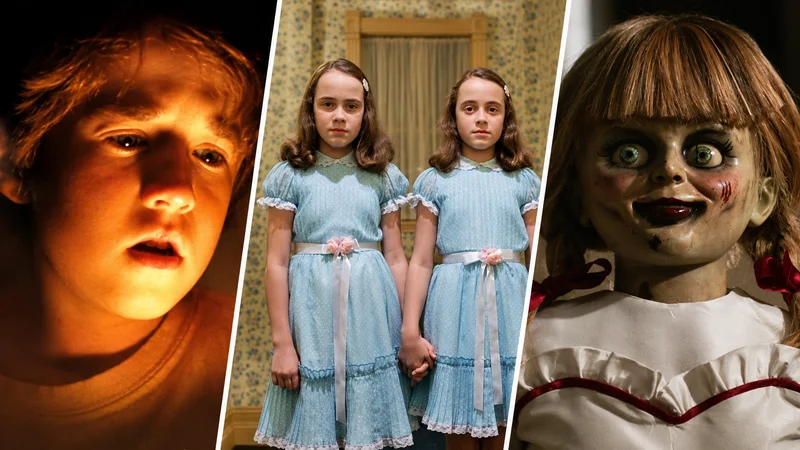
The best paranormal horror movies from Asia often give supernatural danger a specific social or cultural history. These eight films explore cursed media, haunted homes, spirit beliefs, and the frightening consequences of unresolved obligations.
10. Ringu (1998)
- Subgenre: Japanese cursed-media ghost horror
- Mood: Methodical, cold, unshakably eerie
- Ideal for: Viewers who like mysteries with a deadline
A journalist investigates a strange videotape connected to a series of deaths and discovers a curse with a strict time limit. Hideo Nakata builds tension from the simple act of watching images that should never have been recorded. The curse turns a domestic television and an ordinary telephone into objects the audience begins to distrust.
This is the 1998 Japanese original, distinct from the 2002 American remake. Its atmosphere and careful investigation explain why cursed technology became such an influential modern horror idea. Choose it for a chilling supernatural puzzle that needs remarkably little visible violence to establish lasting fear.
11. Ju-on: The Grudge (2002)
- Subgenre: Japanese house-bound curse horror
- Mood: Fragmented, merciless, unnerving
- Ideal for: Fans of aggressive ghost imagery
A violent past leaves a Tokyo home marked by a curse that follows people who enter it. Takashi Shimizu tells the story through connected encounters rather than a simple straight-line investigation, making the house’s history intrude on several lives. Sounds and movements associated with its spirits are often more recognizable than the human characters’ attempts to escape.
The film creates a bleak kind of supernatural logic: innocence is not a dependable defense against an inherited haunting. Its shifting viewpoint contributes to the sense that nobody can see the whole pattern. Seek out the 2002 Japanese theatrical version rather than confusing it with the earlier video entries or the later American remake.
12. Dark Water (2002)
- Subgenre: Japanese apartment-building haunting
- Mood: Damp, anxious, sorrowful
- Ideal for: Viewers who want emotion with their scares
A mother navigating separation and a custody struggle moves into a deteriorating apartment with her daughter. Water stains and disturbing encounters begin to suggest that the building hides an unresolved tragedy. Hideo Nakata makes leaks and neglected hallways into signs of a danger that threatens the fragile security the mother is trying to build.
The film is especially effective because its haunting grows from recognizable worries about shelter and parenthood. Rather than treating a supernatural figure as a random intruder, it makes grief and abandonment part of the mystery. Choose the original Japanese film for its restrained emotional force, not the later English-language remake.
13. A Tale of Two Sisters (2003)
- Subgenre: Korean psychological ghost mystery
- Mood: Lyrical, grief-stricken, disorienting
- Ideal for: Patient viewers who enjoy layered storytelling
Two sisters return to their family home, where the presence of a stepmother and unexplained disturbances deepen already strained relationships. Kim Jee-woon turns elegant rooms into spaces of unease, using careful framing and uncertain memory to make family conflict inseparable from supernatural suggestion. Even quiet conversations feel loaded with information nobody can safely express.
Its suspense depends heavily on perspective, so avoid reading detailed ending explanations beforehand. This is a strong pick if you want more than an isolated apparition: the film asks how grief can transform the meaning of a familiar house. Its emotional complexity rewards a second viewing as much as the initial scares.
14. Shutter (2004)
- Subgenre: Thai revenge-ghost mystery
- Mood: Guilt-ridden, tense, sharply frightening
- Ideal for: Fans of haunted photographs and secrets
Photographer Tun and his girlfriend Jane begin noticing strange figures in pictures after a distressing nighttime incident. Photographs become evidence of something neither wants to confront, while the ghostly presence seems determined to expose hidden conduct. The Thai original uses an everyday visual technology to make accountability feel inescapable.
Its strongest idea is that a haunting can reveal moral failure as well as inspire fear. Readers curious about other regional classics can explore our best asian horror movies collection, which includes a wider range of folk stories and ghost films. Watch this 2004 original for its particularly effective combination of guilt, mystery, and photographic imagery.
15. The Wailing (2016)
- Subgenre: Korean village occult mystery
- Mood: Expansive, distrustful, spiritually disturbing
- Ideal for: Viewers willing to follow complex clues
A policeman investigates illness and violent behavior in a village where suspicion increasingly centers on an outsider. As his family becomes endangered, different explanations compete, and ritual specialists enter the investigation. Na Hong-jin allows folklore, uncertainty, and local social tensions to deepen rather than immediately clarifying the supernatural threat.
The film is lengthy but purposeful, building dread by making each apparent answer feel unstable. Its rituals and accusations carry cultural specificity, while the central desperation is easily understood. Choose it if you value ambiguity and atmosphere more than a straightforward set of demonic rules or a quick solution to a mystery.
16. The Medium (2021)
- Subgenre: Thai-South Korean shamanic found footage
- Mood: Observational at first, increasingly brutal
- Ideal for: Adults comfortable with intense possession horror
A documentary crew follows a shaman in northeastern Thailand and encounters disturbing developments within her family. The film initially presents rituals as part of a recognizable local spiritual life, but events around a younger relative become increasingly frightening. Its camera-based format makes testimony and apparent evidence central to the experience.
The collaboration between Thai and South Korean filmmakers brings a distinct perspective to possession horror. Its later material is graphic and emotionally punishing, so it is not an easy entry point. Choose it when you want ritual-centered terror that grows out of family obligations and competing spiritual interpretations.
17. Incantation (2022)
- Subgenre: Taiwanese occult found footage
- Mood: Participatory, frantic, ominous
- Ideal for: Fans of curses delivered through recordings
A mother attempts to protect her daughter from a curse tied to a previous encounter with forbidden ritual practices. Kevin Ko uses direct address to the camera and interwoven recordings to draw the viewer into the escalating crisis. The structure creates the uneasy feeling that merely learning about the curse could make someone part of its reach.
It is a natural next choice after Ringu or Noroi, but its emotional urgency comes from parental desperation rather than a detached investigation. The film’s visual language also makes belief and spectatorship part of the scare. Watch it without searching for its final revelations if you want the full effect of its unsettling presentation.
Possession, Exorcisms, and Demonic Encounters
Among the best paranormal horror movies, possession stories are particularly frightening because the threat can enter a person rather than simply haunt a location. These nine selections turn rituals, belief, and the loss of bodily control into distinct kinds of fear.
18. The Exorcist (1973)
- Subgenre: Religious possession drama
- Mood: Serious, shocking, deeply unsettling
- Ideal for: Viewers seeking a foundational classic
A mother struggles to understand alarming changes in her daughter before turning toward spiritual intervention. William Friedkin makes medical uncertainty, parental helplessness, and the limits of expertise central to the drama. The supernatural danger becomes frightening partly because so many ordinary attempts to protect the child seem inadequate.
Its disturbing imagery still carries force, but the central relationship is what makes the movie more than an exhibition of effects. It is an influential possession film with an unusually grave tone. Choose it for a demanding classic and expect subject matter considerably harsher than its age might suggest.
19. The Exorcism of Emily Rose (2005)
- Subgenre: Courtroom possession horror
- Mood: Somber, argumentative, frightening
- Ideal for: Fans of faith-versus-evidence stories
Following a young woman’s death during an attempted exorcism, a priest faces prosecution, and the courtroom must confront conflicting accounts of her experiences. Scott Derrickson divides attention between legal testimony and the events witnesses describe, making uncertainty about interpretation part of the story’s structure.
The film stands out because it asks what happens when spiritual belief meets institutional responsibility. Its supernatural scenes are disturbing, but the surrounding debate prevents it from feeling like a standard ritual-and-rescue narrative. It was loosely inspired by a real case, though its dramatic presentation should not be treated as documentary proof of possession.
20. Insidious (2010)
- Subgenre: Astral-projection and demonic haunting
- Mood: Sudden, inventive, colorful
- Ideal for: Fans of energetic supernatural scares
When a boy falls into an unexplained unresponsive state, his family begins experiencing frightening disturbances that seem connected to him. James Wan turns a familiar haunted-home setup into a more unusual exploration of a shadowy spiritual realm. The ordinary household becomes unsafe even when its occupants try to leave it behind.
Insidious is a strong recommendation for viewers who enjoy loud, expertly staged shocks alongside a developed supernatural mythology. Its premise differs from a simple ghost trapped in one building, and the family remains an important emotional anchor. The film premiered in 2010 and reached U.S. theaters in 2011, explaining both dates in some listings.
21. The Conjuring (2013)
- Subgenre: Paranormal-investigation haunted-house horror
- Mood: Accessible, suspenseful, increasingly intense
- Ideal for: Viewers looking for a mainstream genre benchmark
Ed and Lorraine Warren investigate frightening disturbances affecting the Perron family in their secluded farmhouse. James Wan introduces the home through recognizable domestic details before moving into escalating supernatural confrontations. The household’s vulnerability gives the investigators something more urgent than a collection of strange noises to document.
It is an especially approachable choice for viewers seeking traditional ghosts, demonic suggestion, and carefully timed scares in one film. The movie draws on claims associated with real paranormal investigators, but its supernatural events should be understood as dramatized storytelling rather than verified history. Its craft, not its marketing claim, makes it a useful entry point.
22. The Taking of Deborah Logan (2014)
- Subgenre: Documentary-style possession mystery
- Mood: Intimate, disturbing, progressively alarming
- Ideal for: Found-footage fans comfortable with illness-related themes
A student film crew documents Deborah Logan and her daughter’s experience with dementia, only to record increasingly inexplicable behavior. The intimate setup makes the possibility of supernatural intervention especially uncomfortable because the participants are already dealing with vulnerability and uncertainty. The cameras promise a record of the truth but also turn a private crisis into public spectacle.
The movie is effective at exploiting the tension between medical explanations and occult possibilities, although viewers may find its use of illness distressing. It is best suited to audiences who enjoy found footage with a personal rather than purely investigative starting point. Its stronger scares develop from the emotional discomfort already present in the premise.
23. The Conjuring 2 (2016)
- Subgenre: Haunted-house and demonic mystery
- Mood: Expansive, chilling, emotionally direct
- Ideal for: Fans of the first Conjuring movie
The Warrens travel to London to examine frightening disturbances associated with a family in Enfield. The setting changes from an American farmhouse to a crowded household, but the focus on vulnerable children and skeptical observers remains. James Wan gives the sequel a larger supernatural canvas while preserving the investigative frame.
It is more elaborate than its predecessor and depends on accepting an increasingly theatrical supernatural presence. Still, its family relationships give the haunting emotional stakes beyond the next apparition. Watch it after the 2013 film for the best understanding of the recurring investigators, while remembering that the historical claims behind the premise remain contested.
24. The Autopsy of Jane Doe (2016)
- Subgenre: Morgue-set occult mystery
- Mood: Clinical, claustrophobic, increasingly uncanny
- Ideal for: Fans of tightly contained supernatural thrillers
A father and son conducting an autopsy on an unidentified young woman encounter clues that resist ordinary medical explanation. Director André Øvredal keeps most of the film inside the examination facility, using the body’s unexplained condition and a growing sense of confinement to shift the investigation into frightening territory.
The cleverness lies in making an apparently passive subject the center of an active threat. Each discovery changes the meaning of earlier evidence, giving the audience the satisfaction of a puzzle without sacrificing atmosphere. Choose it if you want a strong supernatural premise confined to one memorable location, but expect disturbing medical imagery.
25. Talk to Me (2023)
- Subgenre: Spirit-summoning possession horror
- Mood: Frenetic, grief-stricken, socially uncomfortable
- Ideal for: Viewers wanting a modern supernatural shock
Teenagers discover that an embalmed hand allows them to contact spirits, transforming a dangerous supernatural encounter into a party activity. Danny and Michael Philippou use the group setting to expose how quickly curiosity, peer pressure, and the desire to film an experience can override caution. For Mia, the ritual also touches unresolved personal grief.
The film’s central object is simple but its emotional implications are not. Each apparent thrill creates a new risk, while the effects of possession become increasingly difficult to contain. It premiered at a festival in 2022 and received its major theatrical release in 2023, the year used here.
26. Bring Her Back (2025)
- Subgenre: Domestic occult ritual horror
- Mood: Grief-heavy, cruel, intensely disturbing
- Ideal for: Experienced horror audiences seeking emotional dread
A brother and sister move into the secluded home of a new foster mother and uncover a terrifying ritual. The Philippou brothers build the threat from the uneasy relationship between children who need safety and an adult whose intentions become increasingly alarming. The household setting keeps the supernatural danger tied to a recognizable fear of dependency.
Its emotional cruelty and disturbing images make it far more demanding than an easy ghost-story watch. Sally Hawkins gives the foster mother a striking presence, and the occult material serves a story about grief turning destructive. Released theatrically in 2025, it earns its place for its combination of intimate family tension and uncompromising supernatural horror.
Modern Paranormal Nightmares and Cursed Media
The best paranormal horror movies also use modern cameras, recordings, family heirlooms, and unusual objects to turn everyday habits into supernatural hazards. These final nine selections range from minimalist found footage to inventive recent hauntings.
27. Paranormal Activity (2007)
- Subgenre: Domestic found-footage haunting
- Mood: Minimalist, patient, sleep-disrupting
- Ideal for: Viewers frightened by empty rooms
Katie and Micah set up cameras inside their home to record the source of strange nighttime disturbances. Oren Peli makes the fixed bedroom view a masterclass in anticipation: the audience searches the frame for changes while the people on screen sleep. Familiar household silence begins to feel more dangerous than noise.
Its modest visual approach makes it especially effective in a quiet room with few distractions. The film began festival screenings in 2007 and became a major wider theatrical release in 2009, so those dates are often mixed. Choose it when you want the suggestion of an unseen presence to do most of the frightening work.
28. Sinister (2012)
- Subgenre: Cursed home movies and occult investigation
- Mood: Grim, invasive, intensely unsettling
- Ideal for: Fans of found footage within a conventional narrative
True-crime writer Ellison Oswalt moves his family into a house connected to a murder and discovers recordings that appear to document terrible events. Scott Derrickson uses the grainy films as objects of dread while the writer’s ambition makes it difficult for him to stop looking. The investigation threatens the family he claims to be supporting.
The disturbing recordings and score do much of the emotional work, giving the supernatural mystery a particularly unpleasant atmosphere. It is well suited to viewers who like a story about the consequences of watching something forbidden. The film is considerably harsher in tone than its familiar haunted-house outline might suggest.
29. Oculus (2013)
- Subgenre: Cursed-object psychological horror
- Mood: Disorienting, tragic, puzzle-like
- Ideal for: Viewers who enjoy unreliable perception
Siblings attempt to prove that an antique mirror caused terrible events in their family, setting up a controlled experiment that becomes increasingly difficult to trust. Mike Flanagan shifts between past and present, using conflicting perceptions to make even the act of recording evidence uncertain. The mirror challenges not only safety but the ability to agree on what happened.
Oculus stands apart from simpler cursed-object stories because its characters actively try to test the supernatural threat. That determination becomes a source of vulnerability rather than control. Choose it if you prefer an intricate structure where the audience is never completely certain which version of a scene it is witnessing.
30. The Babadook (2014)
- Subgenre: Domestic supernatural and psychological horror
- Mood: Exhausted, oppressive, emotionally raw
- Ideal for: Fans of ambiguous monster stories
A widowed mother struggles to care for her son after a disturbing picture book appears in their home. Jennifer Kent turns sleeplessness, grief, and parental frustration into a frightening environment where the boundary between emotional distress and supernatural threat becomes unstable. The house feels as trapped by the characters’ exhaustion as the characters feel trapped inside it.
The film can be read through both psychological and paranormal lenses, and that ambiguity is part of its appeal. Its central monster is memorable, but the mother’s emotional reality is the stronger achievement. Viewers dealing with sensitive themes of grief or parenting may find it especially intense despite relatively limited spectacle.
31. It Follows (2014)
- Subgenre: Supernatural pursuit curse
- Mood: Dreamlike, paranoid, relentlessly tense
- Ideal for: Fans of unusual supernatural rules
After a sexual encounter, Jay learns she is being pursued by an entity that can take human form and move toward her without rest. David Robert Mitchell transforms crowds, sidewalks, and distant background figures into sources of anxiety. The threat’s patient movement turns even a wide-open space into somewhere impossible to relax.
Its power lies in a deceptively simple rule that forces viewers to scan every frame. The film carries clear anxieties about intimacy and vulnerability, but it never reduces itself to one obvious allegory. It premiered in 2014 and had a wider U.S. release in 2015, which explains conflicting dates in some listings.
32. Hereditary (2018)
- Subgenre: Family occult and demonic horror
- Mood: Devastating, controlled, increasingly nightmarish
- Ideal for: Experienced viewers seeking emotional intensity
After a death in the family, Annie Graham and her relatives confront grief, disturbing behavior, and a widening sense that something has been set in motion beyond their control. Ari Aster uses family tension and miniature-like compositions to make the household seem vulnerable to an unseen design. The supernatural material grows from already painful relationships.
Toni Collette’s performance anchors the escalating horror in recognizable anguish. The film features deeply disturbing imagery and is best approached without extensive plot knowledge. Choose it when you want paranormal horror whose emotional devastation matters as much as its occult revelations, rather than a comforting tale of spirits being put to rest.
33. Host (2020)
- Subgenre: Screen-based séance found footage
- Mood: Compressed, nervy, startling
- Ideal for: Viewers who like quick, effective scares
Friends conduct an online séance during a period of social isolation, and the video call becomes increasingly dangerous when an unseen presence seems to join them. Rob Savage uses the limits of a computer screen as part of the suspense. An empty square or a momentary connection problem becomes a new opportunity for fear.
Its short running time and familiar technology make it unusually easy to sample, while the premise gives a distinctive snapshot of a specific era. Unlike a long investigative horror film, Host aims for quick escalation. It is a strong group recommendation when you want concentrated supernatural intensity without committing to an elaborate mythology.
34. Late Night with the Devil (2023)
- Subgenre: Broadcast séance and possession horror
- Mood: Retro, satirical, increasingly sinister
- Ideal for: Fans of media-based occult mysteries
A struggling late-night television host stages an ambitious Halloween special featuring a psychic, a skeptic, and a young girl believed to be possessed. Colin and Cameron Cairnes present the unfolding disaster through the grammar of a 1970s broadcast, where an entertainment format becomes dangerously unsuited to handling what it invites into the studio.
David Dastmalchian makes the host’s professional desperation a believable part of the tension. The movie also questions the appetite for sensational supernatural spectacle. Premiering in 2023 and reaching wider theatrical audiences in 2024, it is particularly rewarding for viewers who enjoy period television aesthetics and a slowly unraveling live performance.
35. Oddity (2024)
- Subgenre: Psychic revenge and cursed-object horror
- Mood: Cold, tense, eerily inventive
- Ideal for: Fans of compact modern ghost mysteries
After her twin sister’s violent death, blind antique dealer and psychic Darcy seeks answers at the secluded house where the tragedy occurred. A disturbing wooden figure becomes central to the encounter. Damian McCarthy uses still rooms, odd objects, and the discomfort of being unsure who is present to produce a precise, concentrated supernatural thriller.
Oddity is a smart modern counterpoint to The Haunting, showing how little space a filmmaker needs when the audience is already scanning for danger. Its strongest moments combine physical objects with uncertainty about their meaning. Choose it for a recent paranormal mystery that values atmosphere and carefully placed shocks over an enormous franchise mythology.
Which Paranormal Horror Movies Fit Your Scare Tolerance?
The best paranormal horror movies are easiest to choose by deciding what frightens you most. For quieter stories, begin with The Haunting, The Others, or The Sixth Sense. They focus on uncertainty, performance, and haunted spaces rather than continuous graphic injury. The Orphanage and Dark Water are particularly affecting if you prefer supernatural mysteries with recognizable grief at their center.
If you enjoy investigations and rules, try Ringu, Shutter, Oculus, or Sinister. For more direct jump scares, Insidious and The Conjuring fit that mood. Viewers who like folklore and rituals should prioritize The Wailing, The Medium, and Incantation, allowing time for their different cultural contexts.
At the harsher end, Hereditary, Bring Her Back, The Medium, and The Exorcist contain severe distressing material. Talk to Me and The Taking of Deborah Logan can also be deeply uncomfortable. An excellent supernatural film does not have to be an endurance test. Choosing the right mood will make the experience more rewarding than automatically selecting the most graphic entry.
Frequently Asked Questions (FAQs)
What qualifies as a paranormal horror movie?
A paranormal horror movie places an apparently supernatural phenomenon at the center of its danger, such as a ghost, curse, demonic presence, séance, or inexplicable haunting. Some films preserve ambiguity about whether the threat is psychological or genuinely otherworldly. This list excludes ordinary masked-killer thrillers and creature attacks without a meaningful spiritual or supernatural component.
Which paranormal horror films are scary without much gore?
The Haunting, The Others, The Innocents, and The Sixth Sense rely heavily on atmosphere, performances, and unsettling implications. The Orphanage also favors emotional suspense, although it has disturbing moments. Scare intensity remains personal, so a quiet supernatural story may feel more frightening than a visually graphic one if unseen presences bother you.
Are The Conjuring movies based on true paranormal events?
The films draw inspiration from accounts associated with paranormal investigators Ed and Lorraine Warren, including reports of unusual activity affecting families. However, the movies dramatize their material, and supernatural claims are not established scientific facts. It is more accurate to treat them as fictionalized horror stories inspired by reported cases than as reliable reconstructions of verified hauntings or exorcisms.
What should I watch after Paranormal Activity?
Host is a natural follow-up if you like familiar technology turned into a source of supernatural fear. The Taking of Deborah Logan offers another camera-driven investigation with a more personal premise, while Sinister builds dread around frightening recordings. For an atmospheric change, try The Conjuring, which uses a conventional narrative rather than presenting everything as discovered footage.
Final Thoughts
The best paranormal horror movies reveal a special weakness in human confidence: people can learn the rules of a house, a family, or a recording device, yet still have no way to control what might be hidden there. The strongest films connect fear with grief in The Orphanage, guilt in Shutter, or family vulnerability in The Conjuring.
Do not feel pressured to start with the most aggressive film. A thoughtful marathon might pair The Haunting with The Others, follow with the cursed imagery of Ringu, and end with the modern séance of Talk to Me. The best paranormal horror movies leave the ordinary world feeling slightly different afterward, even when the screen has gone dark.