
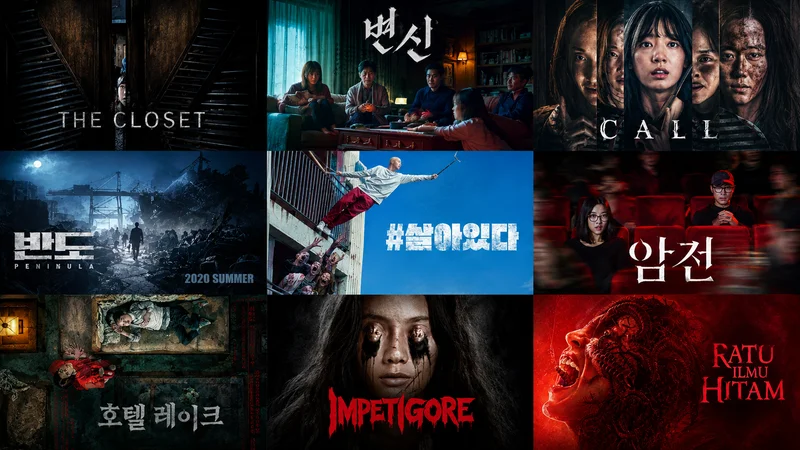
The best asian horror movies offer much more than long-haired ghosts and sudden shocks. Japanese curses, Korean village mysteries, Thai spirit legends, Indonesian family hauntings, and Indian folk nightmares use fear to examine grief, guilt, social pressure, and the consequences of hidden wrongdoing. This Top 35 brings together enduring classics and newer discoveries from eight film traditions.
Our recommendations at ReelShort focus on what makes each story distinctive, not on claiming these international feature films are produced or streamed by this website. The selection includes ghost mysteries, body horror, zombie thrillers, historical folklore, experimental films, and dark comedy.
This guide to the best asian horror movies gives each of the 35 titles its country, tone, viewing fit, and a spoiler-light explanation of why it earns a place. Some involve severe violence or disturbing subject matter, so the mood notes matter.
What Makes Asian Horror So Distinctive?
- Folklore and belief: Local ghost legends, shamanic rituals, curses, and historical traditions often shape the danger.
- Human consequences: Grief, greed, family secrets, and social injustice give supernatural events emotional meaning.
- Different scare styles: Quiet psychological unease sits beside frantic infection horror and extreme bodily violence.
- Expressive filmmaking: Sound, shadows, long takes, ritual imagery, and unusual locations can be as unsettling as monsters.
- Regional range: Japan, South Korea, Thailand, Indonesia, Taiwan, Hong Kong, the Philippines, and India offer distinct traditions.
The best asian horror movies are not a single style that can be reduced to one supernatural image. We include eight national cinema traditions, with one Thai-South Korean collaboration and one Hong Kong-Singapore production.
Japanese Ghost Stories, Curses, and Cinematic Nightmares
Many of the best asian horror movies draw on Japan’s long tradition of spectral stories, but this group also contains detective mysteries and surreal comedy. These ten films reveal how different the same national genre can feel across decades.
1. Ringu (1998)
- Country: Japan
- Genre and mood: Cursed-media ghost story; patient, unnerving
- Best for: Viewers who like supernatural mysteries
A reporter investigates a videotape that seems to condemn its viewers to death after seven days. Hideo Nakata makes the investigation feel ordinary enough to be believable, then contaminates everyday technology with images that refuse to behave rationally. The film does not need a large number of apparitions; its deadline and the act of watching already make each discovery dangerous.
The original Japanese production is especially rewarding for its restrained pacing and unsettling use of silence. It also provides essential context for the later American film The Ring. Choose this version if you want to see how a simple media curse became a defining modern ghost-story idea.
2. Audition (1999)
- Country: Japan
- Genre and mood: Psychological horror; deceptively gentle, then brutal
- Best for: Experienced viewers comfortable with disturbing violence
A widower attempts to find a new partner through an audition arranged under false pretenses. Takashi Miike initially frames the meetings like a lonely romantic drama, allowing an atmosphere of uncertainty to accumulate around a woman who appears reserved and sympathetic. The gap between what characters know and what they want to believe becomes the film’s real source of tension.
Its notorious later material is shocking, but reducing Audition to one violent sequence misses its critique of entitlement and unequal power. The change in tone works best without detailed spoilers. This is a challenging recommendation, not an easy first step into Japanese horror.
3. Ju-on: The Grudge (2002)
- Country: Japan
- Genre and mood: Cursed-house supernatural horror; fragmented, relentless
- Best for: Fans of frightening ghost imagery
The lingering rage associated with a house spreads to people who cross its threshold. Takashi Shimizu tells the story through interconnected encounters rather than one simple chronological chase, making the curse feel indifferent to individual plans. An ordinary doorway or staircase can suddenly become a place where the past intrudes upon the present.
The film’s strength is its refusal to provide comforting rules about avoiding danger. Its sound design and disturbing figures have become genre signatures, yet the structure is just as important as the shocks. Look for this 2002 Japanese theatrical film rather than confusing it with the separate television movies or remakes.
4. Dark Water (2002)
- Country: Japan
- Genre and mood: Haunted-apartment mystery; sorrowful, damp, intimate
- Best for: Viewers who appreciate emotional ghost stories
A newly separated mother moves with her daughter into an aging apartment building where leaking water and unexplained incidents gradually unsettle their lives. Director Hideo Nakata transforms stains, ceilings, and shared corridors into images of neglect. The material anxieties of parenting and insecure housing give the haunting a more personal foundation than an isolated collection of jump scares.
Dark Water is a strong choice for viewers who want sadness and empathy alongside supernatural suspense. The mother-daughter relationship remains central even when the building grows stranger. Its quiet emotional pressure makes it distinct from Ringu, although both films share a director and an interest in modern urban fear.
5. Pulse (Kairo) (2001)
- Country: Japan
- Genre and mood: Internet-age supernatural horror; lonely, apocalyptic
- Best for: Fans of slow existential dread
Young people in Tokyo encounter a mysterious website, disappearances, and disturbing images that suggest the boundary between the living and the dead is weakening. Kiyoshi Kurosawa uses empty rooms and strangely inert figures to create the impression of a city quietly losing its population. Technology does not simply deliver a monster; it exposes a deeper fear of disconnection.
The film is deliberately meditative, and its explanation is less important than its atmosphere of social isolation. Viewers who enjoy conventional fast-moving haunted-house plots may find it unusually spare. Those willing to follow its mood will discover one of the most thoughtful horror responses to the early internet.
6. Noroi: The Curse (2005)
- Country: Japan
- Genre and mood: Occult investigative found footage; methodical, increasingly ominous
- Best for: Viewers who enjoy assembling clues
A paranormal researcher records interviews and apparently unrelated incidents while investigating a disturbing curse. Television segments, unexplained behavior, and fragments of ritual gradually form a larger pattern. Kōji Shiraishi uses the language of documentary investigation so that small details feel important long before the supernatural threat becomes clear.
Rather than rushing toward a single monster reveal, Noroi rewards concentration and patience. Its scattered evidence gives viewers the pleasure of solving a mystery while making the answer more frightening than reassuring. It is an excellent alternative to found-footage films built mainly around sudden camera jolts.
7. Cure (1997)
- Country: Japan
- Genre and mood: Psychological crime horror; hypnotic, morally disorienting
- Best for: Fans of investigative and philosophical suspense
Detective Takabe investigates murders committed by different people who appear to share an inexplicable pattern. An elusive young man becomes crucial to understanding why seemingly ordinary individuals commit horrific acts. Kiyoshi Kurosawa photographs streets and rooms with an eerie stillness that suggests violence may be closer to daily life than anyone wants to accept.
Cure is less interested in an easily categorized villain than in the fragility of identity and responsibility. Its measured conversations can be more alarming than its violent moments. Watch it if you want a detective narrative that becomes an unsettling question about human behavior rather than a routine solution to a case.
8. Kwaidan (1964)
- Country: Japan
- Genre and mood: Folklore ghost anthology; painterly, tragic, dreamlike
- Best for: Classic cinema and visual-art enthusiasts
Masaki Kobayashi adapts four supernatural tales into richly designed episodes involving lost love, broken promises, and haunting encounters. Painted skies, stylized landscapes, and an evocative score create an artificial world that feels closer to a traditional illustrated legend than ordinary realism. Each tale has its own rhythm, giving the anthology an expansive emotional range.
Kwaidan is a superb gateway to older Japanese ghost storytelling, though it asks for patience rather than delivering a barrage of scares. Its greatest pleasures are atmosphere, performance, and the consequences attached to human choices. It is best viewed as an immersive collection of haunting stories, not a single fast-moving thriller.
9. Onibaba (1964)
- Country: Japan
- Genre and mood: Period folk and psychological horror; earthy, sensual, threatening
- Best for: Viewers interested in historical horror
During a period of war, two women survive by ambushing soldiers in a field of tall reeds. A returning man destabilizes their precarious arrangement, while a frightening mask gains increasingly powerful symbolic weight. Kaneto Shindō uses rustling vegetation and harsh landscapes to make hunger, desire, and jealousy feel inseparable from the physical world.
The film demonstrates how horror can emerge from social conditions and emotional desperation without a modern monster mythology. Its imagery remains striking, and its portrayal of survival is deliberately uncomfortable. Choose it if you appreciate genre cinema that treats the natural environment as an active force.
10. House (Hausu) (1977)
- Country: Japan
- Genre and mood: Surreal haunted-house horror comedy; wild, playful, psychedelic
- Best for: Fans of experimental cult cinema
A schoolgirl and her friends travel to an aunt’s country house, where the familiar idea of a haunted home becomes a cascade of impossible events. Nobuhiko Obayashi mixes handmade effects, abrupt changes in visual style, and absurd humor to create an experience that rarely follows conventional logic. Everyday household objects gain personalities and threaten visitors in bizarre ways.
The film’s delight lies in its fearless experimentation. It can feel silly, grotesque, or unexpectedly sad within the same scene, so viewers seeking a grounded plot may be bewildered. For anyone who wants to see horror’s visual rules dismantled with infectious energy, House is difficult to replace.
South Korean Horror: Family Secrets, Outbreaks, and Rituals
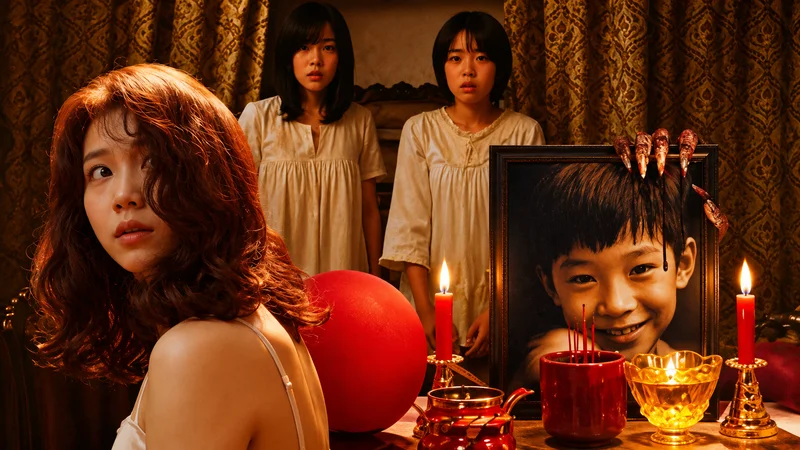
Some of the best asian horror movies from South Korea shift between intimate grief, social satire, supernatural belief, and intense action. These eight picks balance strong character conflict with memorable genre techniques.
11. A Tale of Two Sisters (2003)
- Country: South Korea
- Genre and mood: Family psychological ghost story; mournful, intricately unsettling
- Best for: Fans of atmospheric mysteries
Two sisters return to their family home, where strained relationships with their father and stepmother intersect with disturbing signs that the house may be haunted. Kim Jee-woon gives rooms and possessions emotional significance, using silences and ambiguous encounters to suggest a trauma nobody can discuss openly. The domestic setting is beautiful and profoundly unwelcoming.
The narrative asks viewers to revise first impressions, so avoiding detailed spoilers matters. The supernatural atmosphere and the sisters’ emotional bond are equally important to its impact. Choose it when you want a layered ghost story with a serious interest in grief and family conflict.
12. The Wailing (2016)
- Country: South Korea
- Genre and mood: Rural occult mystery; expansive, disorienting, deeply frightening
- Best for: Patient fans of folklore and investigation
A policeman investigates strange illnesses and violent incidents in a remote village after the arrival of a mysterious outsider. As his family becomes endangered, skepticism, religious interpretations, and accusations compete to explain what is happening. Na Hong-jin builds uncertainty through a complicated network of witnesses and rituals rather than offering an obvious supernatural rulebook.
Its long runtime allows dread and suspicion to spread through the community. Some viewers will find the ambiguity frustrating, but that uncertainty is integral to its power. The Wailing is a demanding and rewarding selection for anyone who wants horror in which every proposed answer carries a cost.
13. Train to Busan (2016)
- Country: South Korea
- Genre and mood: Zombie survival thriller; fast, emotional, desperate
- Best for: Newcomers wanting high-energy horror
A work-focused father takes a train with his daughter when an infection turns the journey into a struggle for survival. Yeon Sang-ho uses the narrow carriages to make every movement count, while the mix of passengers exposes conflicting instincts about cooperation and self-preservation. The action is immediate, yet the father-daughter relationship gives each decision emotional weight.
For viewers trying Korean horror for the first time, this is among the most accessible recommendations. The film offers clear suspense, memorable characters, and social observation without requiring familiarity with local ghost folklore. Expect intense attacks and heartbreak rather than an easy action-comedy ride.
14. The Host (2006)
- Country: South Korea
- Genre and mood: Monster and family horror; energetic, tragicomic, socially sharp
- Best for: Creature-feature fans seeking character depth
A creature appears in Seoul’s Han River and takes a young girl, pushing her family into a desperate rescue attempt. Bong Joon-ho combines spectacular attacks with bureaucratic frustration and small domestic arguments. The monster creates the emergency, but the family’s inability to rely on institutions makes the danger feel more complicated than a simple battle against a beast.
The Host is distinctive because it can be funny and heartbreaking without losing its sense of threat. Its environmental implications also provide a sharper backdrop than many creature movies. Choose it when you want a genre film with a strong social perspective and a family worth following.
15. I Saw the Devil (2010)
- Country: South Korea
- Genre and mood: Serial-killer revenge horror thriller; cruel, relentless, morally corrosive
- Best for: Adults comfortable with extreme violence
After a woman is murdered, a covert agent pursues the killer through an increasingly brutal campaign of retaliation. Kim Jee-woon repeatedly shifts the balance of control between hunter and hunted, exposing how revenge can reproduce the cruelty it claims to punish. The film is meticulously tense but also intentionally punishing.
This is a borderland selection between crime thriller and horror, justified by its sustained brutality and psychological torment. Its greatest question is not whether the killer deserves justice, but what the pursuit does to the avenger. It is unsuitable for viewers avoiding severe violence or sexual threat.
16. The Call (2020)
- Country: South Korea
- Genre and mood: Supernatural time-bending thriller; twisty, urgent, sinister
- Best for: Fans of phone-based mystery and suspense
A woman in the present finds herself speaking by telephone with someone living in the same house decades earlier. Their connection initially offers possibilities that seem impossible in ordinary life, but changing events in one period creates frightening consequences in another. Lee Chung-hyun turns the domestic telephone into an instrument of manipulation and escalating danger.
The story’s attraction lies in its shifting power balance and the price of attempting to alter fate. While more thriller-driven than a traditional ghost movie, it belongs in a broad horror watchlist for its frightening antagonist and sustained dread. Choose it if you enjoy complicated premises that move quickly.
17. Gonjiam: Haunted Asylum (2018)
- Country: South Korea
- Genre and mood: Found-footage haunted-location horror; immersive, escalating, frantic
- Best for: Fans of camera-based ghost scares
A group enters an abandoned psychiatric hospital to stream a live horror experience online. Their staged bravado becomes increasingly difficult to maintain as unsettling events undermine confidence in what is real. Jung Bum-shik uses multiple cameras and viewers’ expectations of sensational online content to turn apparent performance into panic.
This is less philosophically ambiguous than The Wailing and far more interested in immediate, visceral terror. Its format suits audiences who enjoy shared scares and enclosed, unfamiliar spaces. The character setup is straightforward, but the audiovisual approach gives the nightmarish location genuine impact.
18. Exhuma (2024)
- Country: South Korea
- Genre and mood: Shamanic occult mystery; ritualistic, ominous, historically charged
- Best for: Fans of folklore with investigative structure
Shamans, a geomancer, and a mortician become involved in a wealthy family’s troubling ancestral burial. What appears to be a specialized ritual problem expands into a confrontation with hidden history and dangerous spiritual forces. Jang Jae-hyun gives ceremonies and burial practices dramatic significance, so the details of the investigation become part of the suspense.
Exhuma rewards viewers interested in cultural specificity rather than generic haunted-house rules. Its layers can be dense for newcomers, but its unusual professional team and gradual widening of the mystery distinguish it from many contemporary possession films. It is a strong choice for a serious supernatural movie night.
Thailand, Indonesia, and Taiwan: Folklore Meets Modern Fear
The best asian horror movies from this group connect curses with photography, family life, village history, and new digital media. The nine films range from an approachable ghost comedy to extremely graphic infection horror.
19. Shutter (2004)
- Country: Thailand
- Genre and mood: Revenge ghost mystery; guilt-soaked, startling
- Best for: Viewers who like supernatural twists
After a nighttime traffic incident, photographer Tun and his girlfriend Jane notice inexplicable forms appearing in pictures. Their attempts to understand the images gradually turn the camera into a witness against the people using it. Banjong Pisanthanakun and Parkpoom Wongpoom create anxiety through familiar photographic techniques and a haunting shaped by past conduct.
The real strength is the connection between the supernatural mystery and moral responsibility, not simply the apparition’s appearance. For more frightening films from the same era, our best 2000s horror movies collection provides useful context. Be sure to choose the 2004 Thai original, not a later remake.
20. The Medium (2021)
- Country: Thailand / South Korea
- Genre and mood: Documentary-style possession folk horror; intimate at first, increasingly nightmarish
- Best for: Viewers drawn to ritual-centered horror
A documentary team follows a shaman in northeastern Thailand and becomes entangled in the disturbing symptoms affecting a young relative. Banjong Pisanthanakun treats competing beliefs about spiritual inheritance and possession as the central uncertainty. The observational style initially encourages trust in testimony before the situation becomes increasingly difficult to contain.
Produced through Thai and South Korean collaboration, this film is particularly strong at making rituals feel embedded in a family and community. Its later escalation is severe and includes disturbing material. Choose it if you want a possession narrative that places local spiritual practices at the center rather than borrowing a familiar Western exorcism template.
21. Laddaland (2011)
- Country: Thailand
- Genre and mood: Haunted-neighborhood family drama; uneasy, domestic, tragic
- Best for: Viewers who appreciate family-centered scares
A father moves his family into a promising housing estate, hoping the purchase will represent a better life. Violent incidents and reports of ghosts begin to destabilize the neighborhood, while financial strain and family disagreements complicate every attempt to feel secure. The new house gradually becomes evidence of a dream that may be impossible to maintain.
Laddaland is compelling because homeownership and parental pressure are as prominent as the haunting. Its supernatural events amplify anxieties already present inside the family. Choose it if you prefer emotionally grounded Asian horror in which the terrifying house is tied to a believable everyday aspiration.
22. Pee Mak (2013)
- Country: Thailand
- Genre and mood: Ghost folklore comedy romance; funny, tender, occasionally creepy
- Best for: Mixed groups wanting laughs with ghost lore
After returning from war, Mak brings four friends home to meet his wife Nak, while rumors in the village insist that she is a ghost. Banjong Pisanthanakun revisits Thailand’s well-known Mae Nak legend with broad physical comedy and a sincere romantic center. The friends’ alarm and Mak’s attachment constantly pull the story toward different emotional tones.
It is one of the friendliest entries for viewers who fear serious horror, although the ghost imagery can still surprise. The familiar legend gives the humor a local cultural identity rather than making this an interchangeable parody. Watch it when you want warmth, silliness, and just enough haunting for a group night.
23. Satan’s Slaves (2017)
- Country: Indonesia
- Genre and mood: Family haunted-house horror; oppressive, grief-stricken
- Best for: Fans of curses and household suspense
After a mother dies following a long illness, her children begin experiencing terrifying incidents in their aging family house. Joko Anwar sets the story in the early 1980s, giving the residence a worn, tactile atmosphere. As the children seek answers, ordinary grief intersects with hints of a more dangerous spiritual history.
The sibling relationships give the film a humane emotional center, while its use of sound and space creates steady suspense. It is a strong starting point for modern Indonesian horror. Note that this is the 2017 reimagining associated with Anwar, rather than the earlier film on which it draws.
24. Impetigore (2019)
- Country: Indonesia
- Genre and mood: Village-based folk horror; earthy, mysterious, brutal
- Best for: Viewers interested in rural curses
A woman travels to a remote village after learning she may have inherited a family property, only to discover that the residents have dangerous reasons to fear her connection to their past. Joko Anwar makes the village itself a source of suspicion, with inherited grievances and communal rituals gradually explaining why an outsider is unwelcome.
Impetigore brings social history into an atmospheric supernatural thriller without sacrificing direct peril. Its strongest scenes make tradition and geography feel inseparable from the threat. It is a good next step after Satan’s Slaves if you want a more outward-looking story rooted in the consequences of an old village secret.
25. The Queen of Black Magic (2019)
- Country: Indonesia
- Genre and mood: Vengeful occult body horror; mean, graphic, haunted
- Best for: Experienced viewers comfortable with gore
A family visits the rural orphanage where the father grew up, and what should be a respectful reunion becomes a series of supernatural attacks. Long-buried wrongdoing gives the menace a personal foundation, while Kimo Stamboel pushes the physical consequences into increasingly gruesome territory. The orphanage represents a past its former residents cannot easily escape.
The film is a reimagining of an earlier Indonesian horror title and should be identified as the 2019 production, even though international release listings sometimes show 2020 or 2021. It is especially effective for viewers who enjoy explicit body horror connected to a revenge mystery, not for audiences avoiding graphic injuries.
26. The Sadness (2021)
- Country: Taiwan
- Genre and mood: Extreme infection horror; frenetic, nihilistic, shocking
- Best for: Only viewers seeking very graphic horror
A mysterious outbreak in Taipei drives infected people toward horrifying violence, leaving a young couple struggling to find one another amid the collapse of ordinary life. Rob Jabbaz turns recognizable streets and public spaces into sudden threats. The film’s danger comes not from a slow zombie shuffle but from the terrifying loss of restraint in people who still look human.
Its extremity is central to the experience, including sexual violence and severe bodily harm. The Sadness should not be recommended casually as a starter Asian horror movie. For viewers who actively seek transgressive infection cinema, its bleak intensity distinguishes it from more accessible outbreak thrillers.
27. Incantation (2022)
- Country: Taiwan
- Genre and mood: Cursed-video occult found footage; participatory, anxious, supernatural
- Best for: Fans of ritual mysteries and recorded media
A mother addresses the camera while trying to protect her young daughter from a curse linked to an earlier encounter with a forbidden ritual. Kevin Ko’s film uses video evidence and the language of direct address to implicate the viewer in the mystery. Its shifts between present consequences and the troubling past give the footage an investigative structure.
Incantation is an excellent modern pick for people who enjoyed Ringu or Noroi but want a more interactive-feeling curse narrative. The film gains force from the mother’s desperate appeal, not merely from its symbols. It is particularly effective when watched without searching for explanations of its concluding revelations.
Hong Kong, the Philippines, and India: Hauntings and Dark Folklore
In this final section of the best asian horror movies, old beliefs and contemporary anxieties meet in cursed objects, threatening homes, and stories of greed. These eight selections widen the list beyond its most internationally familiar industries.
28. The Eye (2002)
- Country: Hong Kong / Singapore
- Genre and mood: Supernatural vision thriller; melancholic, unsettling
- Best for: Fans of ghost mysteries with emotional stakes
After receiving a corneal transplant, a young woman begins seeing figures that other people cannot. The Pang brothers turn an apparent medical breakthrough into a terrifying uncertainty about perception and responsibility. Ordinary public spaces become frightening when the protagonist cannot distinguish the living from the dead.
Its supernatural imagery is memorable, but the emotional question of what it means to see suffering gives the story additional weight. The original production is associated with Hong Kong and Singapore and should not be confused with its later American remake. Choose it for an accessible entry into early-2000s ghost cinema.
29. Dumplings (2004)
- Country: Hong Kong
- Genre and mood: Socially satirical body horror; elegant, revolting, provocative
- Best for: Adults comfortable with disturbing subject matter
A woman seeking to restore her youth turns to a seller whose special dumplings promise extraordinary results. Fruit Chan turns food, beauty standards, and the fear of aging into a grimly comic portrait of desire and exploitation. The polished settings make the story more disturbing because the horror is concealed beneath ordinary social rituals.
Dumplings is far more upsetting in concept than a conventional ghost tale, with taboo material involving reproductive violence. Its satire of status and bodily control is the reason to include it, not a simple desire to shock. Look for the feature-length version released in 2004 when selecting this entry.
30. Feng Shui (2004)
- Country: Philippines
- Genre and mood: Cursed-object household horror; ominous, accessible
- Best for: Fans of folklore and fatalistic curses
A woman brings home a bagua mirror that seems to improve her family’s luck, only to realize that good fortune is connected to deaths around her. Chito S. Roño builds tension around an object traditionally associated with protection, turning everyday superstition into a frightening exchange. The family’s joy makes the apparent bargain harder to reject.
The film’s use of Filipino domestic life and Chinese zodiac symbolism gives its curse a distinct identity. It also provides a useful introduction to popular Philippine supernatural horror without requiring extensive background reading. Watch for the way the threat grows from an apparently beneficial possession rather than a house known to be haunted.
31. The Road (2011)
- Country: Philippines
- Genre and mood: Haunted-road crime mystery; atmospheric, somber
- Best for: Viewers who like linked timelines and investigations
Three teenagers vanish along an abandoned road, prompting an investigation that reconnects the disappearance to older crimes. Yam Laranas uses the landscape and fragmented chronology to suggest that the road holds more than one generation of terrible secrets. The opening incident becomes the doorway into a much larger history of violence.
The film mixes police procedural, ghost story, and psychological drama, giving the remote location a grim emotional past. It is often confused with a 2012 release because of its later American theatrical opening; the Philippine film dates to 2011. Choose it when you want an eerie narrative puzzle rather than an uninterrupted onslaught of scares.
32. Tumbbad (2018)
- Country: India
- Genre and mood: Mythological folk fantasy horror; rain-soaked, greedy, ominous
- Best for: Fans of folklore and period atmosphere
In a village marked by a dark legend, a man becomes increasingly determined to uncover a hidden ancestral treasure. The search unfolds across years, transforming the pursuit of wealth into a personal obsession. Rahi Anil Barve’s film makes decaying buildings, relentless rain, and ritualized danger feel inseparable from the protagonist’s greed.
Tumbbad offers a distinctive Indian take on folk horror because its supernatural figure embodies a moral appetite that ordinary ambition cannot satisfy. The film originally appeared in 2018, despite later rereleases appearing in some databases. Choose it for atmospheric fantasy horror with an unusually strong visual identity.
33. Bulbbul (2020)
- Country: India
- Genre and mood: Gothic feminist folk horror; lyrical, mournful, unsettling
- Best for: Viewers interested in period tragedy
In a late-nineteenth-century Bengali household, a young bride grows into an enigmatic woman while mysterious deaths trouble the surrounding community. Anvita Dutt uses period melodrama and supernatural suggestion to examine relationships shaped by violence and hierarchy. The film’s color and costume design give the story the appearance of a dark fairy tale.
Its haunting is bound to the question of whose pain becomes visible and whose behavior society excuses. It favors tragic mood and symbolic storytelling over constant scares. Watch it if you want a film whose social concerns are as important as its supernatural mystery.
34. Bhoot (2003)
- Country: India
- Genre and mood: Urban apartment possession horror; close, tense, domestic
- Best for: Fans of city-based hauntings
A married couple moves into a Mumbai apartment without fully understanding its past, and the wife begins experiencing frightening changes in behavior. Ram Gopal Varma places the supernatural threat inside a modern high-rise rather than a traditional gothic mansion. The husband’s attempts to explain what is happening give the film an increasingly urgent domestic perspective.
Bhoot is particularly interesting as an Indian urban ghost story that relies heavily on suspense and household unease. Its apartment setting turns a seemingly practical housing decision into a source of dread. Choose it if you want a more grounded contemporary location than the village myths found elsewhere on this list.
35. Bramayugam (2024)
- Country: India
- Genre and mood: Malayalam period folk horror; austere, claustrophobic, philosophical
- Best for: Fans of black-and-white historical dread
A wandering singer in seventeenth-century Kerala finds shelter at a secluded mansion whose inhabitants and rules become increasingly unsettling. Rahul Sadasivan’s black-and-white imagery turns the estate into a world of shifting power and dependence. The stranger’s hope of safety gives way to the suspicion that accepting hospitality may have carried a terrible price.
Its interest in servitude, control, and folklore makes it a strong counterpoint to more effects-heavy modern Indian horror. Mammootty’s imposing screen presence is part of the film’s unsettling atmosphere. Choose Bramayugam when you want a thoughtful chamber nightmare rather than a fast slasher.
Which Asian Horror Movies Should You Watch First?
The best asian horror movies serve different moods, so choose by the fear you enjoy rather than by nationality alone. For an approachable first night, try Train to Busan if you want fast survival suspense, The Host for monster action with family humor, or Pee Mak for a ghost romance that welcomes laughter. If supernatural mysteries appeal more, start with Ringu, Shutter, or The Eye.
Slow-burning viewers may prefer Cure, Pulse, Kwaidan, or Bramayugam, each of which uses silence and uncertainty differently. Folklore enthusiasts should consider The Wailing, The Medium, Impetigore, and Tumbbad. For a found-footage night, pair Noroi with Gonjiam: Haunted Asylum and Incantation, while recognizing that their approaches to recorded evidence vary substantially.
Do not assume that the best asian horror movies must be the most extreme. The Sadness, Audition, The Queen of Black Magic, and I Saw the Devil feature particularly disturbing material and should be chosen deliberately.
Frequently Asked Questions
What are the best Asian horror movies for beginners?
Train to Busan is a strong starting point if you like urgent action and clear emotional stakes. The Host balances creature suspense with family drama, while Pee Mak uses comedy to soften its ghostly premise. For a more traditional haunting, try the original Thai Shutter. None is entirely mild, so check content guidance if you are sensitive to frightening imagery.
Which films are the scariest without extreme gore?
Ringu, Dark Water, A Tale of Two Sisters, and Pulse are notable for atmosphere, uncertainty, and psychological pressure rather than continuous graphic violence. Noroi can be deeply unsettling through its documentary presentation. Your response will depend on whether you find unseen supernatural threats or immediate physical attacks more frightening, so a quieter film may feel more intense than expected.
What is the difference between Japanese and Korean horror?
There is no absolute division, but influential Japanese titles such as Ringu and Pulse often emphasize curses, isolation, and the uncanny in everyday life. Korean films in this selection range from psychological family mysteries to ritual investigation and energetic zombie action. Both industries are diverse, so it is more useful to compare individual films than assume every movie follows one national formula.
Which Asian horror movies are based on folklore?
Kwaidan, Onibaba, Pee Mak, The Medium, Exhuma, Impetigore, Tumbbad, and Bramayugam all draw on folklore, ritual, or historical spiritual beliefs in different ways. Some adapt recognizable legends while others create new stories using local cultural elements. Watching them together highlights the range of ideas and emotions that folklore can support across Asian cinema.
Final Thoughts
The best asian horror movies show that fear can emerge from almost anything: a videotape, a family house, an inherited obligation, a stranger on a train, or an old legend that refuses to disappear. Their variety matters more than any claim that one country has a monopoly on terrifying storytelling. The most lasting selections often connect their frightening images to recognizable human choices.
Start with a film that matches your mood, then move beyond its immediate neighbors. Pair Shutter with Feng Shui for cursed objects, The Wailing with Exhuma for intricate ritual mysteries, or Kwaidan with Bramayugam for very different period nightmares. The best journey through this collection is the one that makes you curious about another country’s imagination.