
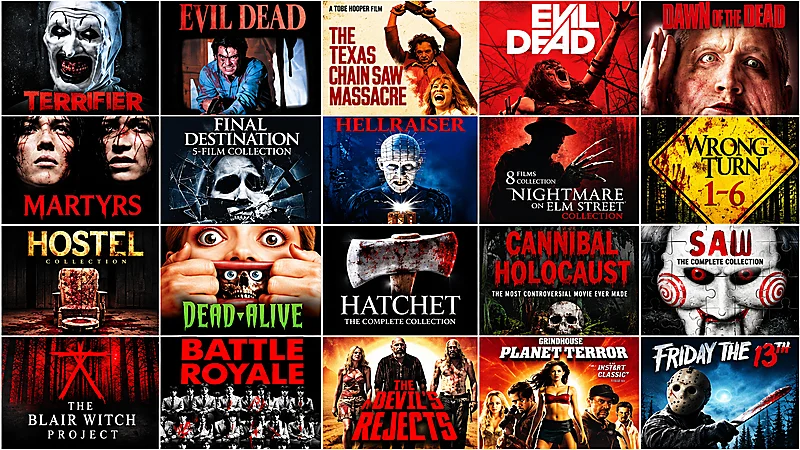
The best gore horror movies use blood and disturbing practical effects to do more than make an audience flinch. Some turn human bodies into outrageous comedy, while others make physical suffering the center of a bleak moral question. This Top 30 ranges from George A. Romero’s zombie classics and Peter Jackson’s splatter comedy to French extreme horror, Japanese cult cinema, and recent body-horror successes.
At ReelShort, we look at films through their stories, characters, and the experiences they offer. These are feature films made by different studios and filmmakers, not productions owned or streamed by this website. Every title below contains meaningful graphic violence, but the intensity and emotional effect vary enormously. A funny zombie movie is not the same experience as an unrelenting torture thriller.
This guide to the best gore horror movies provides 30 spoiler-light recommendations with a quick description of each film’s gore style, tone, and ideal audience. The list deliberately avoids treating violence as a competition with a provable winner. Some entries depict sexual violence, abuse, cruelty toward vulnerable people, or severe bodily injury; the accompanying notes flag those themes so readers can make an informed choice.
What Makes a Gore Horror Movie Worth Watching?
- Style of violence: Practical creature effects, exaggerated splatter, body transformation, torture, and violent slashers appear here.
- Tone: Some entries are ridiculous and funny; others are relentless, tragic, or psychologically upsetting.
- Craft: Inventive makeup, editing, sound, and suspense can make an effects sequence memorable beyond its explicitness.
- Content boundaries: Several films involve sexual violence, pregnancy-related distress, or other especially sensitive themes.
- Viewing fit: Start with playful splatter before moving to extreme horror if you are unsure about your tolerance.
Not every scary movie belongs in this category. The best gore horror movies make visible injury, bodily transformation, or elaborate bloody set pieces an important part of the filmmaking. That includes exaggerated splatter comedy, technically ambitious makeup effects, and more confrontational stories whose violence is meant to disturb rather than entertain. The selections are editorial recommendations, not a scientifically measured ranking of blood volume.
Classic Practical Effects, Zombies, and Splatter Comedy
The earliest best gore horror movies in this selection changed what makeup artists could show on screen. These nine films offer zombie chaos, science-fiction transformations, and comic effects that remain influential because the materials appear physically present.
1. Dawn of the Dead (1978)
- Gore style: Zombie splatter and social satire
- Tone: Savage but darkly playful
- Best for: Fans of classic practical zombie effects
Survivors of a zombie outbreak take shelter in a shopping mall, hoping its supplies and secure entrances will protect them from the dead. George A. Romero makes the consumer setting both an entertaining fortress and a pointed joke about habits that continue after society collapses. Tom Savini’s makeup and violent encounters give the danger a tactile presence.
What makes this an essential splatter film is the contrast between lively action and the emptiness of the survivors’ temporary comfort. Its effects have a proudly handmade quality, and the satire gives the mayhem a purpose. This is the 1978 original, not Zack Snyder’s 2004 remake.
2. The Evil Dead (1981)
- Gore style: Cabin possession splatter
- Tone: Frantic, grimy, relentless
- Best for: Low-budget supernatural horror fans
Friends staying in an isolated cabin awaken malevolent forces after encountering recordings and a strange book. Sam Raimi uses aggressive camera movement, improvised effects, and a hostile wooded setting to create the feeling that the environment itself has joined the attack. The escalating possession leaves the characters with few moments of safety.
Its gore is inseparable from the inventiveness of a small production pushing beyond its resources. Unlike the overt slapstick of its sequel, the original is genuinely aggressive and mean-spirited. Choose it for handmade horror energy, while expecting disturbing violence rather than a lighthearted cabin adventure.
3. The Thing (1982)
- Gore style: Science-fiction transformation horror
- Tone: Paranoid, disgusting, claustrophobic
- Best for: Fans of creature makeup and mysteries
At an Antarctic research station, an alien organism begins imitating living beings, destroying the team’s ability to trust one another. John Carpenter and effects artist Rob Bottin make the creature’s unpredictable anatomy a terrifying spectacle. A familiar colleague can suddenly become something that does not obey ordinary biological rules.
The most disturbing images work because they make suspicion visible: no one can know what is hiding beneath a human face. Even between transformations, the film remains an excellent ensemble thriller. It belongs here for some of the genre’s most imaginative practical effects, not merely for the quantity of blood.
4. Re-Animator (1985)
- Gore style: Mad-scientist splatter comedy
- Tone: Manic, gruesome, irreverent
- Best for: Fans of cult science-fiction horror
Medical student Herbert West develops a serum that can revive dead tissue, while his confidence in the experiment far exceeds his ability to manage the results. Stuart Gordon turns the morgue into a laboratory of grotesque surprises, supported by Jeffrey Combs’ intense performance. The film repeatedly finds awful consequences in what West calls progress.
Its practical effects are excessive, but the timing and self-important characters give the chaos a sharp comic rhythm. This is not a gentle parody: it contains sexual assault and other graphic material. For viewers comfortable with that content, it remains a defining example of horror that is simultaneously funny and repulsive.
5. Day of the Dead (1985)
- Gore style: Zombie gore and military siege
- Tone: Bleak, angry, confrontational
- Best for: Romero fans and makeup-effects enthusiasts
Scientists and soldiers shelter underground while the dead dominate the world above. George A. Romero places the survivors’ disagreements beside experiments involving an unusually responsive captive zombie. The bunker becomes a study of authority, fear, and the failure to cooperate even when humanity is in immediate danger.
Tom Savini’s elaborate makeup work makes the consequences of those failures unusually physical. Compared with Dawn of the Dead, this sequel is harsher and more pessimistic. Its most notorious effects sequences matter because the humans have spent the film creating the conditions for catastrophe.
6. The Fly (1986)
- Gore style: Tragic science-fiction body horror
- Tone: Heartbreaking, intimate, revolting
- Best for: Viewers who want emotional substance
Scientist Seth Brundle accidentally merges his genetic material with that of a housefly during a teleportation experiment. David Cronenberg follows the transformation through both increasingly distressing bodily changes and the strain it places on Seth’s relationship with journalist Veronica. Jeff Goldblum makes the character’s arrogance, fear, and vulnerability believable.
This is body horror with unusual emotional weight. The makeup does not simply display a monster; it forces viewers to watch a person gradually lose control of his body and identity. It is an excellent choice for someone who values tragedy and performance as much as memorable effects.
7. Evil Dead II (1987)
- Gore style: Supernatural splatter slapstick
- Tone: Hysterical, kinetic, cartoonishly bloody
- Best for: Horror-comedy and practical-effects fans
Ash returns to a cabin overrun by demonic forces, and ordinary furniture, animals, and even parts of his own body become sources of surreal punishment. Sam Raimi turns the original’s possession premise into a whirlwind of wild camera moves, physical comedy, and extravagant blood effects. Bruce Campbell’s performance holds together the escalating absurdity.
The sequel is a great starting point for people who want spectacular splatter without the emotional cruelty of extreme torture cinema. Its humor does not make it free of disturbing material, but the exaggerated style keeps the experience playful. The inventive filmmaking matters more than any attempt to count the injuries.
8. Street Trash (1987)
- Gore style: Melting-body exploitation comedy
- Tone: Sleazy, chaotic, grotesque
- Best for: Fans of transgressive cult oddities
In a deteriorating New York neighborhood, a cheap alcoholic drink causes horrifying physical transformations. Director J. Michael Muro approaches the premise through grimy streets, lurid colors, and deliberately outrageous practical effects. Characters and situations exist in a harsh, exploitative world where the bizarre contamination becomes only one form of ugliness.
Its colorful melting effects are more memorable than the often unpleasant behavior surrounding them. This is a film to approach with clear expectations: the comedy is crude, and the material includes sexual violence and other offensive content. It remains notable as an extreme example of the 1980s melt-movie tradition.
9. Braindead (Dead Alive) (1992)
- Gore style: Zombie splatter comedy
- Tone: Absurd, exuberant, gloriously messy
- Best for: Viewers seeking outlandish practical gore
A bite from a strange zoo animal infects Lionel’s controlling mother, turning his attempts to protect her into a nightmare of escalating undead chaos. Peter Jackson sets the outbreak against an awkward romance and a comically dysfunctional family. Every effort to conceal the problem creates a larger, messier disaster.
Braindead, released in North America as Dead Alive, is one of the strongest examples of splatter used as slapstick. Its climax deliberately pushes practical blood effects into absurd territory. If you can handle exaggerated gore but dislike the hopelessness of torture films, this is an ideal place to explore the genre’s playful side.
Slashers, Captivity, and the New French Extremity
Here, violence is more personal and less easily laughed away. These best gore horror movies include serial killers, elaborate traps, and confrontational French productions; many require strong content boundaries around torture, assault, and prolonged distress.
10. Maniac (1980)
- Gore style: Urban serial-killer slasher
- Tone: Sleazy, oppressive, intimate
- Best for: Fans of grim exploitation history
Joe Spinell plays Frank Zito, a killer whose violent fixation on women turns a grimy New York environment into the setting for a disturbing character study. William Lustig keeps the audience uncomfortably close to Frank’s perspective, while Tom Savini’s effects make his crimes difficult to dismiss as abstract thriller violence.
Unlike the joking excess of a zombie comedy, the gore here is meant to repel. Its portrayal of violence against women is an important content warning and may make the film unsuitable for many viewers. It is included for its notorious makeup work and influence on grim urban slashers, not for a claim that its killer deserves sympathy.
11. The Burning (1981)
- Gore style: Summer-camp slasher
- Tone: Suspenseful, rough, vicious
- Best for: Fans of early stalk-and-kill cinema
A prank at a summer camp leaves caretaker Cropsy badly injured, and years later the surrounding campsites become the scene of violent revenge. Tony Maylam builds a familiar woodland slasher scenario around an attacker whose presence steadily erodes the campers’ sense of safety. The isolated setting helps each encounter feel difficult to escape.
Tom Savini’s effects are a major part of the movie’s reputation, particularly in its sudden group attack sequence. The story is less psychologically ambitious than some entries, but it is valuable for anyone interested in practical slasher craftsmanship. Its treatment of threatened teenagers can be intense even when the narrative is relatively simple.
12. Hostel (2005)
- Gore style: Captivity and torture horror
- Tone: Cruel, cynical, upsetting
- Best for: Adults who knowingly seek extreme thrillers
American travelers in Europe discover that their pursuit of excitement has led them toward a business built around the suffering of other people. Eli Roth begins with reckless tourism before turning the characters’ lack of caution into an experience of confinement and terror. The idea of violence sold as luxury gives the story a deliberately ugly social dimension.
The film is closely associated with the rise of torture-centered horror in the 2000s, but it offers more than an uninterrupted series of injuries. Its anxiety about exploitation and privilege is central to the premise. The explicit violence and sexual material make it unsuitable for casual group viewing.
13. Saw III (2006)
- Gore style: Mechanical-trap torture thriller
- Tone: Bleak, elaborate, punishing
- Best for: Fans of franchise puzzles and extreme effects
As Jigsaw becomes gravely ill, his apprentice Amanda continues the deadly games while doctor Lynn Denlon and another captive, Jeff, become part of a new test. Darren Lynn Bousman expands the franchise’s interest in moral judgment through a series of increasingly punishing contraptions. Each device forces a character to confront a painful decision.
Compared with the original Saw, the third film places much greater emphasis on on-screen bodily damage. Its complicated connections also reward viewers who know the earlier installments. It is most suitable for franchise fans who want elaborate effects alongside a continuing story, rather than newcomers who prefer an isolated mystery.
14. Hatchet (2006)
- Gore style: Bayou slasher splatter
- Tone: Campy, loud, knowingly excessive
- Best for: Fans of old-school monster slashers
Tourists taking a night trip through a Louisiana swamp encounter the legend of Victor Crowley, a terrifying killer whose attacks turn the outing into a violent survival ordeal. Adam Green deliberately revives the rough humor and elaborate practical kills associated with 1980s slashers. The wetlands provide a suitably isolated, murky setting.
The story is intentionally simple, but that allows the makeup and physical set pieces to become the main attraction. It is a fun choice for viewers who enjoy theatrical violence rather than serious psychological distress. Hatchet debuted in 2006 and received wider U.S. theatrical release in 2007, explaining conflicting dates in film listings.
15. High Tension (2003)
- Gore style: French home-invasion slasher
- Tone: Breathless, aggressive, divisive
- Best for: Viewers comfortable with brutal suspense
Marie travels with her friend Alex to a countryside family home, where a violent intruder interrupts their stay. Alexandre Aja builds much of the film around pursuit, isolation, and the helplessness of being caught far from assistance. The attacks have a harsh physical immediacy that helped define an especially confrontational period of French horror.
Its sustained pressure is impressive, but a later narrative decision remains controversial and may frustrate viewers expecting a tightly logical thriller. The original French film premiered in 2003 and reached U.S. theaters in 2005. Watch it for the intensity of its early survival sequences rather than an unqualified promise of a satisfying mystery.
16. Inside (À l’intérieur) (2007)
- Gore style: French extreme home invasion
- Tone: Claustrophobic, devastating, exceptionally graphic
- Best for: Experienced viewers comfortable with pregnancy-related distress
On Christmas Eve, a pregnant widow faces a frightening stranger who will not leave her home alone. Alexandre Bustillo and Julien Maury make the domestic setting an intensely vulnerable place, using isolation and the heroine’s physical condition to heighten every confrontation. The seasonal date deepens the contrast between expected security and actual danger.
Inside is not a casual recommendation: it contains extreme violence and pregnancy-related distress. Its relentlessly enclosed structure makes it memorable, but its brutality will alienate some viewers. Readers interested in other films from the same period can consult our best 2000s horror movies guide for a wider range of styles.
17. Martyrs (2008)
- Gore style: French extreme psychological horror
- Tone: Punishing, nihilistic, philosophical
- Best for: Only viewers actively seeking severe horror
A young woman’s search for the people responsible for past abuse leads into a much darker network of suffering. Pascal Laugier begins with recognizable revenge-horror expectations before changing the terms of the story. The physical violence is explicit, but the film also asks disturbing questions about people who attempt to justify pain through grand theories.
The experience is far heavier than a movie built around playful special-effects invention. Torture, trauma, and prolonged cruelty are central, and many horror fans will reasonably prefer to avoid it. Choose the 2008 French original, not the later American remake, if you are deliberately exploring the movement’s most uncompromising work.
18. The Loved Ones (2009)
- Gore style: Australian captivity and revenge horror
- Tone: Darkly funny, vicious, deeply uncomfortable
- Best for: Fans of twisted teen-horror premises
When Brent declines a classmate’s invitation to the school dance, the rejection leads to an appalling attempt to create a private version of the celebration. Sean Byrne takes the ordinary rituals of teenage romance and makes them threatening through Lola’s determination to control another person’s response. The film’s polished pop surface contrasts with the physical abuse beneath it.
Robin McLeavy’s performance gives the antagonist a disturbingly energetic presence, while the captive protagonist’s ordeal keeps the stakes urgent. The material includes significant torture and should not be sold as light teen entertainment. The film premiered in 2009, though its later U.S. theatrical release is often listed as 2012.
International Extreme Horror and Cult Experiments
Gore traditions are not confined to Hollywood. These six films bring very different visual and cultural approaches, from Japanese cyberpunk satire to Norwegian zombie comedy and a devastating Taiwanese outbreak. The best gore horror movies in this group are connected by ambition, not by a single tone.
19. Audition (1999)
- Gore style: Japanese psychological extreme horror
- Tone: Deceptively calm, then shocking
- Best for: Patient viewers who can tolerate sexual violence and injury
A widower seeks a new partner through a deceptive audition process and becomes fascinated with a woman whose quiet behavior seems to promise an easy connection. Takashi Miike spends a long time building what resembles a subdued relationship drama. As information about the characters becomes less reliable, that calm turns increasingly threatening.
The notorious violence arrives after the audience has already been drawn into the characters’ assumptions. Its impact comes from that change of perspective, not simply from displaying a gruesome scene. Because it contains sexual violence and torture, Audition is better suited to experienced viewers who want difficult psychological horror than to casual splatter fans.
20. Ichi the Killer (2001)
- Gore style: Japanese yakuza extreme cinema
- Tone: Hyperactive, cruel, satirical
- Best for: Adults seeking transgressive cult films
Yakuza enforcer Kakihara searches for his missing boss and becomes entangled with Ichi, a deeply troubled killer whose violent acts destabilize the criminal underworld. Takashi Miike adapts Hideo Yamamoto’s manga with extravagant effects and an aggressive visual style. The result combines gangster melodrama with scenes designed to disturb and provoke.
Its excess is linked to the characters’ obsession with power and masculine violence, but that does not make the material easy to endure. Torture and sexual violence are prominent content concerns. The film earns a place for its remarkable place in Japanese extreme cinema, not because every provocation contributes equally to a satisfying story.
21. Tokyo Gore Police (2008)
- Gore style: Japanese cyberpunk mutation splatter
- Tone: Satirical, delirious, outrageously graphic
- Best for: Fans of inventive effects and dystopian absurdity
In a dystopian Tokyo, specialist officer Ruka hunts criminals whose bodies mutate into dangerous biological weapons. Yoshihiro Nishimura fills the world with lurid advertisements, surgical imagery, and surreal transformations. The future-city setting allows each confrontation to introduce a different grotesque visual joke about institutions and violence.
The film is more interested in wild design than believable police procedure, which makes it an ideal recommendation for viewers seeking imaginative practical and digital effects. Its extreme bodily violence and sexualized imagery are substantial warnings. Choose it for manic creativity and dark satire rather than a restrained crime narrative.
22. Dead Snow (2009)
- Gore style: Norwegian Nazi-zombie comedy
- Tone: Snowbound, bloody, irreverent
- Best for: Fans of action-heavy zombie splatter
Medical students on a remote mountain holiday discover that the surrounding landscape hides undead soldiers from the Second World War. Tommy Wirkola turns the snow-covered setting into an arena for frantic survival, combining familiar cabin-horror mistakes with elaborate comic violence. The contrast between pristine scenery and messy zombie attacks becomes the film’s running visual joke.
It is a lively choice when a group wants inventive zombie mayhem rather than emotional misery. The characters lean into genre conventions, and the film knows its own ridiculousness. Although often associated with 2009 releases, some festival archives use 2008, so the date can vary by source.
23. Baskin (2015)
- Gore style: Turkish surreal occult splatter
- Tone: Hellish, disorienting, cruel
- Best for: Fans of dream logic and extreme occult horror
A squad of police officers responds to a call that leads them into an abandoned building where ordinary procedure becomes meaningless. Can Evrenol turns the location into a nightmarish descent through ritual, dread, and increasingly grotesque imagery. The characters’ uniforms and weapons offer little protection once familiar rules stop applying.
The film stands out for combining bodily horror with a sense of spiritual disorientation rather than straightforward torture-movie logic. Its explicit cruelty makes it unsuitable for many viewers. Baskin premiered in 2015 and received later commercial releases, so the initial year is the clearest identifier for this Turkish feature.
24. The Sadness (2021)
- Gore style: Taiwanese outbreak and extreme violence
- Tone: Relentless, nihilistic, profoundly distressing
- Best for: Only adults prepared for sexual violence and severe gore
A strange infection spreads through Taipei, driving people toward cruel and destructive behavior while a young couple struggles to find each other. Rob Jabbaz uses familiar urban environments to turn the everyday city into an unpredictable threat. The infected retain an unnervingly human appearance, making the collapse of ordinary restraint especially alarming.
The film is among the harshest entries here, with sexual violence, torture, and graphic injury central to the experience. It is not an ideal entry-level horror recommendation, however impressive the energy of its filmmaking. It premiered in 2021, with later international streaming releases, and should be clearly identified as a Taiwanese production.
Modern Splatter, Possession, and Body-Horror Reinventions
Recent best gore horror movies show that brutal effects can serve slasher spectacle, social satire, or supernatural dread. The six final choices range from a silent killer-clown franchise to award-winning films about the terrifying pressure to change one’s appearance.
25. Terrifier (2016)
- Gore style: Indie killer-clown splatter
- Tone: Mean, stripped-down, unrelenting
- Best for: Hardcore slasher-effects fans
Art the Clown stalks victims on Halloween night, turning a simple urban slasher setup into a series of gruesome confrontations. Damien Leone emphasizes the killer’s silent physical performance and elaborate practical effects rather than deep character psychology. David Howard Thornton makes Art theatrically expressive even without conventional dialogue.
The first feature establishes the series’ uncompromising interest in extreme violence, but its thin story is a fair limitation. Some viewers will enjoy the handmade effects; others will find the cruelty exhausting. It originated in 2016 and is also cataloged under its wider 2018 theatrical release.
26. Terrifier 2 (2022)
- Gore style: Supernatural clown slasher
- Tone: Expansive, surreal, extremely bloody
- Best for: Fans seeking more story alongside splatter
Art the Clown returns and targets Sienna and her younger brother on Halloween, introducing stronger fantasy elements and a more developed central heroine. Damien Leone broadens the universe without abandoning the inventive practical gore that defined the original. The longer running time gives Sienna’s attempts to survive a more substantial emotional arc.
The elaborate attacks remain intentionally upsetting, but the sequel’s greater narrative ambition makes it a better standalone recommendation for some viewers. It is not suitable for anyone uncomfortable with extended graphic cruelty. Choose it when the combination of a resourceful heroine, occult imagery, and outrageous effects sounds appealing.
27. Terrifier 3 (2024)
- Gore style: Christmas-set extreme slasher
- Tone: Festive, sadistic, relentless
- Best for: Committed franchise fans with very high gore tolerance
Sienna and her brother attempt to rebuild their lives after the earlier Halloween attacks, but Art the Clown returns during the Christmas season. The setting puts cheerful decorations and seasonal rituals beside the franchise’s most deliberately offensive violence. Damien Leone uses the holiday atmosphere to sharpen the visual contrast rather than soften the danger.
This installment is for viewers who already understand the series’ limits and actively want that brand of excess. Its violence is intentionally extreme, not simply an occasional shocking scene. The Christmas connection also distinguishes it from the earlier films without changing the core appeal: Art’s performance and ambitious makeup effects.
28. When Evil Lurks (2023)
- Gore style: Argentine demonic contagion
- Tone: Desperate, bleak, unpredictably violent
- Best for: Fans of folklore and shocking supernatural horror
Brothers Pedro and Jimmy discover signs of a demonic infection in a rural community, but attempts to move the threat only worsen its spread. Demián Rugna builds an unnerving world where supernatural danger follows rules people may not know or respect. Even everyday rural spaces become unsafe once those rules are broken.
The movie’s violence is shocking because its timing challenges familiar expectations about who a horror film will protect. Beneath the gore is a story about panic, responsibility, and the failure to listen to warnings. It is one of the strongest modern choices for viewers who want both supernatural atmosphere and genuinely disturbing consequences.
29. The Substance (2024)
- Gore style: Satirical body-horror transformation
- Tone: Savage, glamorous, increasingly grotesque
- Best for: Fans of social satire and elaborate effects
After being pushed out of television work because of her age, former star Elisabeth Sparkle uses an experimental product that creates a younger version of herself. Coralie Fargeat uses the rules governing Elisabeth and Sue to turn beauty expectations into physical nightmare. Demi Moore and Margaret Qualley make the escalating competition emotionally credible.
The graphic transformations are central to a biting satire about control, aging, and how the entertainment industry judges bodies. Its excess has a purpose beyond shock, even when the imagery becomes absurd. Choose it if you want an ambitious contemporary film that combines performance, dark humor, and extreme practical body horror.
30. The Ugly Stepsister (2025)
- Gore style: Fairy-tale beauty body horror
- Tone: Grotesque, satirical, increasingly painful
- Best for: Viewers interested in feminist revisionist fairy tales
Elvira hopes to win a prince’s affection, but her mother’s plans for transforming her appearance become progressively invasive. Emilie Blichfeldt reimagines the Cinderella story through the experience of a stepsister whose value is measured by impossible standards. A richly designed period world makes the bodily interventions feel especially cruel.
The film uses graphic cosmetic procedures and uncomfortable humor to expose the violence hidden inside an ideal of beauty. It may be too physically upsetting for viewers who are more sensitive to medical imagery than slasher attacks. Released in 2025, it makes a striking companion to The Substance without merely copying its premise.
How to Choose the Right Level of Gore for Your Movie Night
You do not need to select the most disturbing title to appreciate this genre. If you want to enjoy effects as invention, start with Evil Dead II, Re-Animator, or Braindead. Their absurd humor provides some emotional distance from the bloodshed, even though the imagery can still be intense. The Thing and The Fly are better if you want unsettling transformations tied to strong stories.
For tense but comparatively direct slashers, try Hatchet or The Burning. If you prefer elaborate mysteries and connected franchise storytelling, Saw III is a more demanding choice than the original Saw. French films such as Inside and Martyrs are much harder emotionally, with far less comic relief. Do not mistake their reputation for a requirement that every horror fan must see them.
The best gore horror movies also vary in the kind of imagery that causes discomfort. The Substance and The Ugly Stepsister use invasive body modification to explore social expectations, while When Evil Lurks turns supernatural infection into unpredictable violence. The Sadness and Ichi the Killer are especially difficult because of sexual violence and cruelty. Content warnings are more useful than invented numerical gore ratings, so consider them when planning a marathon.
Frequently Asked Questions
What makes a movie a gore horror film?
A gore horror film uses visible injuries, bodily destruction, or graphic transformation as an important part of its frightening effect. The tone can range from exaggerated splatter comedy to distressing realism. A movie does not have to contain the most blood ever filmed, but the physical violence should matter to its style or story rather than appear only in a brief incidental moment.
Which gory horror movies are better for beginners?
If you are comfortable with exaggerated fake blood, Evil Dead II and Braindead offer a comic route into splatter cinema. Re-Animator also mixes effects with humor, although it has disturbing sexual content. The Thing may be easier to follow as a suspense story, but its creature transformations are still intense. None is appropriate for every viewer.
What is the difference between gore horror and body horror?
Gore describes graphic injury and bloodshed, while body horror focuses on the body changing, failing, or becoming something unfamiliar. They often overlap. Hatchet is primarily a violent slasher, whereas The Fly makes bodily transformation central to its tragedy. The Substance combines extreme effects with social satire about beauty and aging. Both styles can be highly disturbing without having identical themes.
Which films on this list are the hardest to watch?
Martyrs, Inside, The Sadness, Ichi the Killer, and Audition are especially challenging because of prolonged cruelty, torture, sexual violence, or distressing subject matter. Terrifier 3 is extremely graphic but more deliberately theatrical. Intensity is subjective, and no one needs to watch a film that crosses a personal boundary to understand the genre.
Final Thoughts
The best gore horror movies are most interesting when their effects express something beyond the desire to shock. Romero uses damaged bodies to question society, Cronenberg finds tragedy in physical change, and contemporary filmmakers turn beauty culture or demonic corruption into visible nightmare. Splatter comedy has its own value too: imaginative makeup and audacious timing can turn horror into wonderfully messy spectacle.
Start with the experience you actually want. Choose Braindead for unruly laughter, The Thing for suspense and craftsmanship, or The Substance for modern body-horror satire. Save films such as Inside and Martyrs for occasions when you knowingly want severe material. A memorable horror marathon depends more on good choices than on enduring the greatest possible amount of blood.