
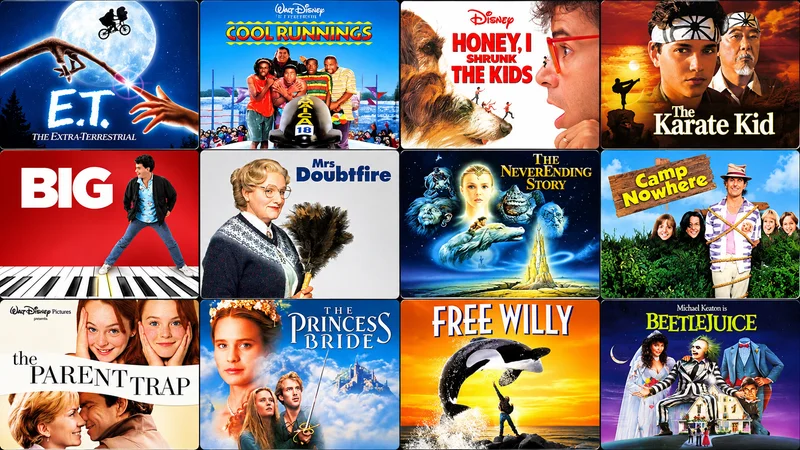
The best classic family movies bring different generations into the same story, whether that means following a girl down the Yellow Brick Road, cheering for an unlikely animal hero, or laughing at a child’s impossible adventure. This Top 35 celebrates beloved films from 1937 through 1999, combining hand-drawn animation, timeless musicals, coming-of-age stories, and imaginative live-action favorites.
At ReelShort, we enjoy stories that give audiences memorable characters and reasons to watch together. These titles were produced by many filmmakers and studios; they are not presented as films owned or distributed by our website. A classic can be wonderful without being suitable for every age, so we identify frightening scenes, older cultural portrayals, and emotionally demanding themes where relevant.
Our guide to the best classic family movies gives each selection three quick viewing cues and two spoiler-light observations about its lasting appeal. For a consistent definition, classic here means a feature film released before 2000, not necessarily a black-and-white production. This lets an early Hollywood musical share the list with the animated and live-action favorites that defined childhood for many 1990s viewers.
Why Do Classic Family Movies Still Hold Up?
- Generational appeal: A strong story gives children an adventure and adults something meaningful beneath it.
- Variety: Expect animated fairy tales, musicals, sports drama, animal stories, and imaginative fantasy.
- Character growth: Friendship, honesty, compassion, courage, and family relationships carry the stories.
- Historical perspective: Older animation and live-action styles can be charming while also reflecting dated ideas.
- Age-aware choices: Some family favorites contain loss, peril, coarse language, or frightening creatures.
The best classic family movies do not all move at the same pace or suit the youngest member of a household. The numbers below organize 35 distinct recommendations rather than claim that every movie can be compared by one rating. Try one gentle animated adventure, one live-action story, and one family musical to see what your household connects with most.
Animated Fairy Tales and Golden-Age Disney Favorites
Some of the best classic family movies began with handmade animation that still feels alive decades later. These eight stories mix songs, talking animals, and fairy-tale peril, but their old-fashioned attitudes and occasional frightening sequences deserve context.
1. Snow White and the Seven Dwarfs (1937)
- Type: Hand-drawn fairy-tale animation
- Mood: Whimsical, musical, occasionally frightening
- Best for: Families introducing children to animation history
Snow White flees a jealous queen and finds safety with seven dwarfs whose habits give the fairy tale its comic rhythm. Disney’s first animated feature uses expressive character movement, songs, and deep forest backgrounds to make the world feel enormous. Its simplicity leaves plenty of space for children to understand the heroine’s danger and the kindness she receives.
The queen’s transformation and poisoned apple remain unsettling, so this is not automatically a gentle choice for preschoolers. Adults may notice how old-fashioned its heroine feels, but the film remains worth revisiting for the craftsmanship behind its storybook atmosphere. It offers a natural starting point for a family interested in the history of feature animation.
2. Pinocchio (1940)
- Type: Animated moral adventure
- Mood: Inventive, adventurous, surprisingly dark
- Best for: Children ready for some frightening fantasy
A wooden puppet dreams of becoming a real boy and repeatedly encounters trouble while trying to distinguish guidance from temptation. Pinocchio’s journey includes a traveling showman, a mysterious island, and a perilous ocean encounter. The animation shifts smoothly from cozy workshop scenes to threatening fantasy, letting young viewers experience how curiosity can carry consequences.
Its songs and comic companions are engaging, but abduction and the transformations at Pleasure Island may upset sensitive children. The best reason to choose it is not a tidy lecture about obedience; it is the story of a character learning to care about others. Parents can talk with kids about trust and responsibility afterward.
3. Bambi (1942)
- Type: Animated woodland coming-of-age drama
- Mood: Tender, beautiful, emotional
- Best for: Families comfortable discussing loss
A young deer discovers the forest through friendship, changing seasons, and the watchful presence of his mother. The film gives animals expressive personalities without turning the natural world into an entirely safe playground. Its quiet visual passages and richly illustrated environments still distinguish it from more dialogue-heavy animated adventures.
Bambi is among the clearest examples of family cinema that can be both gentle and heartbreaking. A major loss and threatening scenes involving hunters are important content considerations, especially for younger children. The story’s lasting appeal lies in how it connects growth with the knowledge that the world changes and relationships matter.
4. Cinderella (1950)
- Type: Animated fairy-tale musical
- Mood: Hopeful, romantic, playful
- Best for: Children who enjoy classic princess stories
Cinderella survives an unkind household with the support of animal friends and an unexpected fairy godmother. Familiar magic transforms an impossible invitation into a visit to the royal ball, but a midnight deadline gives the fantasy urgency. The mice offer comic energy while the heroine’s patience anchors the story in the wish to be treated fairly.
This remains a dependable choice for a relaxed family afternoon, particularly for younger viewers who respond to music and transformation sequences. Adults may want to discuss its dated assumptions about romance and rescue. The film’s best moments are its visual inventiveness and the small acts of loyalty that help Cinderella reach a different future.
5. Alice in Wonderland (1951)
- Type: Surreal animated literary fantasy
- Mood: Colorful, strange, mischievous
- Best for: Imaginative kids who like nonsense comedy
Alice follows a White Rabbit and enters a world governed by contradictory rules, changing sizes, talking animals, and impossible conversations. Rather than following one conventional quest, the film creates a chain of encounters with personalities who rarely explain themselves. The Queen of Hearts brings an energetic threat to an otherwise playfully confusing journey.
It is a fun pick for families who like visual invention more than a clear moral lesson. Younger children may find the atmosphere odd or the queen alarming, while adults can enjoy the film’s jokes about authority and language. Its unpredictable structure is the attraction, not a flaw requiring every scene to make literal sense.
6. Peter Pan (1953)
- Type: Animated fantasy adventure
- Mood: Flight, pirates, childhood wonder
- Best for: Families able to discuss dated cultural portrayals
Peter Pan invites Wendy and her brothers to Never Land, where they encounter mermaids, the Lost Boys, and Captain Hook’s pirates. The flying sequences and the tension between childhood freedom and responsibility give the film a lasting storybook identity. Hook and the crocodile provide comic danger without taking over the children’s sense of adventure.
Some scenes include outdated stereotypes of Indigenous peoples, an important reason for parents to watch thoughtfully rather than present the film uncritically. Its swordplay and villains can also be frightening to small children. For families willing to discuss those issues, the central fantasy of refusing to grow up remains a lively conversation starter.
7. Lady and the Tramp (1955)
- Type: Animated animal romance
- Mood: Warm, funny, gently adventurous
- Best for: Families who enjoy animal-centered tales
Lady, a pampered cocker spaniel, meets a streetwise dog called Tramp when changes at home leave her feeling insecure. Their contrasting lives open a story about belonging, loyalty, and the difference between comfort and freedom. The famous restaurant meal gives the romance a memorable visual centerpiece, but the wider adventure has more to offer than one scene.
This is relatively cozy compared with Disney’s darker fairy tales, though threats from a dogcatcher, rats, and other animals may bother young viewers. The film contains dated cultural caricatures worth acknowledging. It works best as a charming pet adventure with a gentle message that family can grow beyond the expectations of the household.
8. The Jungle Book (1967)
- Type: Animated jungle musical adventure
- Mood: Breezy, jazzy, intermittently tense
- Best for: Kids who enjoy music and animal characters
Mowgli must leave his jungle home when the tiger Shere Khan becomes a danger to him, traveling with Bagheera and the easygoing bear Baloo. Musical encounters with monkeys, snakes, and elephants keep the pace lively, while the boy’s friendships provide a sense of safety amid unfamiliar surroundings.
Its melodies and playful animal voices are the main reasons it remains popular across generations. Shere Khan and Kaa can still frighten young children, so a little parental company helps. Families who enjoy musical storytelling will find it an accessible way to discuss growing up and leaving the place where you first felt at home.
Old Hollywood Musicals, Animal Dramas, and Live-Action Classics
These best classic family movies use performances, music, sports, and ordinary family tensions to create stories that do not need constant fantasy spectacle. Many offer rich multigenerational viewing, while several handle serious sadness or historical conflict.
9. The Wizard of Oz (1939)
- Type: Live-action musical fantasy
- Mood: Magical, colorful, occasionally scary
- Best for: Families ready for witches and tornadoes
A tornado carries Dorothy from Kansas into Oz, where she searches for a way home with the Scarecrow, Tin Man, and Cowardly Lion. The transition to a richly colored fantasy world remains a memorable piece of movie magic. The companions’ different wishes give the adventure a warm, cooperative rhythm.
The Wicked Witch and flying monkeys can frighten younger children, even though the film’s larger spirit is reassuring. Judy Garland’s performance keeps Dorothy grounded in a recognizable longing for home. It is an ideal multigenerational watch when adults want to share a beloved musical without assuming every image has become harmless with age.
10. Meet Me in St. Louis (1944)
- Type: Period musical family comedy
- Mood: Cozy, nostalgic, bittersweet
- Best for: Families who enjoy songs and domestic stories
The Smith family navigates romance, schooldays, and household changes in St. Louis as the 1904 World’s Fair approaches. Judy Garland leads a lively ensemble, and the film lets small misunderstandings accumulate rather than constructing a single oversized adventure. Seasonal celebrations provide an inviting picture of family life across the year.
Although the Christmas material is especially memorable, this is not exclusively a Christmas movie. Its appeal comes from recognizable tension between family traditions and the possibility of moving away. A few dated attitudes reflect its era, but the songs and gentle emotional conflicts make it rewarding for viewers comfortable with classic musical pacing.
11. National Velvet (1944)
- Type: Live-action horse-racing drama
- Mood: Determined, warm, inspirational
- Best for: Animal lovers and older school-age viewers
Young Velvet Brown dreams of entering her horse in England’s Grand National steeplechase, a goal few adults expect her to achieve. Elizabeth Taylor gives Velvet a fierce enthusiasm, while Mickey Rooney plays a young man whose experience helps shape her ambition. The story makes the training and preparation important rather than treating the race as simple wish fulfillment.
This is a strong choice for children who like animals and sports stories, especially because Velvet must rely on persistence rather than magical intervention. Racing danger and a few emotional moments may be tense for sensitive viewers. Its historical gender expectations also give parents an opportunity to discuss who gets encouraged to pursue a dream.
12. Miracle on 34th Street (1947)
- Type: Santa-centered courtroom fantasy
- Mood: Gentle, witty, hopeful
- Best for: Families who enjoy holiday traditions
Kris Kringle is hired as a department-store Santa and begins insisting that he is the real Santa Claus. His confidence unsettles a practical mother and her skeptical daughter while drawing attention from the legal system. The film balances a child’s sense of wonder against adult habits of insisting that everything be proven.
Edmund Gwenn’s performance gives the debate a kindly human center. The film has enough sharp dialogue to interest adults without losing younger viewers’ curiosity about Santa. Choose the 1947 original for an approachable old-Hollywood story that questions whether practicality must always defeat imagination.
13. Old Yeller (1957)
- Type: Frontier family and animal drama
- Mood: Tender, rugged, heartbreaking
- Best for: Older children ready for difficult pet themes
While his father is away, young Travis learns to manage life on a Texas homestead with the help of a stray yellow dog. Their bond grows through everyday work and dangerous encounters with wild animals. The frontier setting offers a practical, sometimes harsh account of what responsibility can demand from children.
Old Yeller is a family classic, but it is not a carefree animal adventure. Violent animal encounters and a devastating ending make it unsuitable for many younger or especially sensitive viewers. It is worth watching with older kids who can talk afterward about love, difficult decisions, and loss.
14. Swiss Family Robinson (1960)
- Type: Castaway island adventure
- Mood: Inventive, energetic, occasionally perilous
- Best for: Kids who like exploration and homemade inventions
After a shipwreck, a family settles on an island and transforms survival into a series of elaborate projects, including an extraordinary treehouse. The movie celebrates cooperation, resourcefulness, and the delight of making a strange place feel like home. Threats from pirates and wildlife keep its adventure moving beyond comfortable domestic scenes.
The construction sequences are still wonderfully engaging, particularly for children who enjoy imagining how they would build shelter or solve practical problems. Some colonial-era portrayals and animal-action material feel dated today and deserve context. Choose it for an old-fashioned survival fantasy with a strong family team at its heart.
15. The Parent Trap (1961)
- Type: Separated-twins family comedy
- Mood: Mischievous, sentimental, playful
- Best for: Families discussing blended or separated households
Hayley Mills plays identical twins Susan and Sharon, who discover their relationship at summer camp and decide to exchange places in hopes of reuniting their parents. The setup gives the comedy a clear engine and lets the performer create two distinct personalities. Camp rivalries become a much bigger plan driven by the girls’ longing for family connection.
The children’s ingenuity is entertaining, though modern families may have mixed feelings about the film’s assumption that divorced parents should reunite. It works best when that wish is treated as the characters’ hope rather than a universal solution. This is the 1961 original, not the 1998 remake with Lindsay Lohan.
16. Mary Poppins (1964)
- Type: Live-action and animation musical
- Mood: Whimsical, witty, emotionally warm
- Best for: Mixed-age groups who love music
A remarkable nanny arrives at the Banks household and introduces the children to adventures that blend everyday London life with impossible fantasy. Julie Andrews gives Mary a reassuring authority while Dick Van Dyke’s Bert supplies physical comedy and songs. Beneath the magical outings is a family struggling to connect across different priorities.
The film’s musical numbers are inviting, but the most rewarding element for adults is the transformation of a household that has forgotten how to listen. Some scenes have old-fashioned rhythms, and the bank sequence can feel tense. For a multigenerational evening, few musicals offer such a balanced combination of spectacle and emotional purpose.
17. The Sound of Music (1965)
- Type: Family musical and historical drama
- Mood: Joyful, romantic, then serious
- Best for: Older children and families who enjoy long musicals
Maria arrives to care for the seven von Trapp children in Austria and gradually brings music and warmth into a disciplined home. Julie Andrews’ energetic performance gives the family transformation its charm. The songs are memorable, but the developing relationship between Maria, the children, and their father creates the emotional foundation.
The later political context involves the rise of Nazism and an increasingly dangerous environment, so this is not a purely carefree musical. Its long running time also makes it better for viewers happy to settle in. It is a wonderful option for a shared movie night with room for both singing and a conversation about courage.
1970s and 1980s Adventures Families Still Talk About
The best classic family movies from this period include fantastical quests and surprisingly intimate friendships. For a December-specific watchlist, our best family christmas movies recommendations focus on holiday settings; these adventures work just as well on a summer afternoon or a rainy weekend.
18. Willy Wonka & the Chocolate Factory (1971)
- Type: Musical fantasy and moral fable
- Mood: Whimsical, strange, occasionally menacing
- Best for: School-age children comfortable with dark jokes
Charlie Bucket finds a golden ticket that grants him entry to Willy Wonka’s mysterious candy factory. Gene Wilder keeps the chocolatier charming and faintly unsettling while each visiting child encounters a challenge shaped by their own habits. The colorful rooms and unusual inventions are memorable, but the factory rarely feels entirely safe.
This is the 1971 film, not the 2005 adaptation. The tunnel sequence and punishments can disturb young viewers, while the dark comedy is especially satisfying to older kids and adults. Choose it for imaginative production design and a story about humility that avoids feeling like a simple lecture.
19. The Muppet Movie (1979)
- Type: Puppet road-trip musical comedy
- Mood: Silly, affectionate, self-aware
- Best for: Mixed-age families who enjoy gentle humor
Kermit the Frog sets out for Hollywood and meets an expanding collection of friends, including Fozzie, Miss Piggy, and Gonzo. The road-trip structure gives each character a chance to be funny, while the film affectionately mocks the conventions of show business. Its musical numbers are woven into an earnest story about making something together.
The humor works at different levels, with quick visual jokes for children and industry references for adults. The plot is intentionally loose, but the ensemble’s warmth is the attraction. Choose it for a calm, lighthearted evening that introduces the Muppets without requiring familiarity with their television history.
20. The Black Stallion (1979)
- Type: Animal friendship and sports adventure
- Mood: Beautiful, patient, emotional
- Best for: Horse lovers and patient older children
After a shipwreck, young Alec survives on an island with a remarkable black horse, slowly earning the animal’s trust. Carroll Ballard devotes long passages to images and movement rather than explanatory dialogue. Once rescued, the pair’s relationship opens the possibility of a racing future.
The film’s visual restraint makes it unlike many noisy family adventures, rewarding children who can attend to gestures and changes in trust. A traumatic shipwreck and parental loss are substantial content considerations. For families who appreciate animals and cinematic beauty, its opening island sequence is particularly memorable.
21. E.T. the Extra-Terrestrial (1982)
- Type: Science-fiction friendship adventure
- Mood: Wonder-filled, funny, moving
- Best for: Families with school-age kids who can handle peril
Elliott discovers a stranded alien and brings him into his family’s suburban home, forming an extraordinary bond while attempting to keep their friendship secret. Steven Spielberg gives the extraterrestrial a personality built from vulnerability and curiosity, not conquest. The neighborhood setting makes the fantastic encounter feel possible from a child’s viewpoint.
E.T. succeeds because friendship and separation matter more than the special effects. Scenes involving illness, government pursuit, and apparent loss can be frightening or heartbreaking for younger children. It is an ideal choice for a family willing to share a big emotional adventure and talk about empathy afterward.
22. The NeverEnding Story (1984)
- Type: Fantasy quest and storybook adventure
- Mood: Magical, melancholy, occasionally frightening
- Best for: Older children who love imaginative worlds
Bastian finds refuge from bullies in a mysterious book about the world of Fantasia, where a young warrior named Atreyu struggles against a force called the Nothing. Wolfgang Petersen blends elaborate creatures with the idea that a reader might become part of the story. Fantasia feels wonder-filled but genuinely vulnerable.
Its atmosphere is richer and sadder than some viewers remember. A particularly painful horse-related scene and threatening creatures make it a cautious choice for sensitive kids. The film’s best idea is that stories can help people confront loneliness, even as the fantasy world seems to be fading away.
23. The Goonies (1985)
- Type: Treasure-hunt adventure comedy
- Mood: Boisterous, exciting, a little scary
- Best for: Older school-age kids and teens
A group of friends searches for pirate treasure in hopes of saving their neighborhood homes, stumbling into underground passages and the path of a criminal family. Richard Donner keeps the children noisy and imperfect, which makes their loyalty feel convincing. The booby-trapped journey gives the movie a board-game sense of escalating adventure.
Despite its reputation as family entertainment, the film includes coarse language, frightening threats, and dated jokes that may not suit younger viewers. Its appeal comes from teamwork and the thrill of imagining a remarkable secret just beyond an ordinary town. It is best saved for older children ready for its chaos.
24. The Princess Bride (1987)
- Type: Fairy-tale romance and swashbuckling comedy
- Mood: Witty, charming, adventurous
- Best for: Families with older kids who enjoy wordplay
A grandfather reads a tale of Princess Buttercup, Westley, sword fights, and unusual villains to his initially skeptical grandson. Rob Reiner blends sincere romance with playful awareness of storybook conventions. Memorable supporting characters help the journey feel like a collection of surprises rather than one predictable rescue.
The witty dialogue offers adults plenty to enjoy while younger viewers follow the adventure. Swordplay, torture-related peril, and frightening creatures can be intense for small children. Choose it when the family wants a clever fantasy that treats affection and humor as equally important to heroism.
25. My Neighbor Totoro (1988)
- Type: Japanese animated woodland fantasy
- Mood: Gentle, curious, reassuring
- Best for: Families seeking a calm, imaginative experience
Sisters Satsuki and Mei move with their father to a countryside home near the hospital where their mother is recovering. They discover friendly forest spirits, including the enormous Totoro, and begin exploring a world that seems to respond to their curiosity. Hayao Miyazaki makes rain, trees, and ordinary domestic life as enchanting as the creatures.
The movie has unusually little conventional conflict, which makes it a valuable alternative to noisy adventure films. Concern about the mother’s health and a brief missing-child scare add emotional tension. For younger children who enjoy gentle fantasy, it is one of the most inviting classics on this list.
26. Honey, I Shrunk the Kids (1989)
- Type: Inventive live-action science-fiction comedy
- Mood: Energetic, playful, perilous
- Best for: School-age children who enjoy imaginative action
An inventor accidentally shrinks his children and their neighbors’ children, leaving them to cross a backyard that has become an enormous wilderness. Joe Johnston makes familiar household and garden objects appear extraordinary through practical effects. Ants, lawn equipment, and water drops become formidable obstacles at the new scale.
The premise is immediately understandable and offers a wonderful excuse for family members to imagine everyday life differently. Giant insects and dangerous situations may frighten smaller children. It works best for school-age viewers who enjoy teamwork and ingenious solutions more than complicated science-fiction explanations.
1990s Family Favorites: Animation, Comedy, and Childhood Wonder
These best classic family movies helped shape the family viewing habits of the 1990s. Computer animation, daring live-action effects, and thoughtful coming-of-age stories made the decade particularly varied, with options for both younger kids and teens.
27. Home Alone (1990)
- Type: Holiday slapstick adventure
- Mood: Mischievous, funny, affectionate
- Best for: School-age children and nostalgic parents
Kevin McCallister finds himself accidentally left behind when his family departs for Christmas vacation and discovers that two burglars have targeted the house. Chris Columbus builds an elaborate series of defensive tricks around Kevin’s ingenuity, but the story also lets him recognize how much he misses the family he wanted to escape.
Its physical comedy is cartoonish rather than realistic, and the traps should never be imitated. The mixture of independence, fear, and reunion has made it a reliable holiday favorite. Families looking for a specifically seasonal marathon can find many more options beyond this one without assuming every classic family film is a Christmas story.
28. Beauty and the Beast (1991)
- Type: Animated romantic musical fantasy
- Mood: Enchanting, comic, sometimes frightening
- Best for: Families comfortable with a threatening villain
Belle enters an enchanted castle to take her father’s place as a prisoner and begins discovering the lonely people hidden behind its magical surfaces. The animated household objects add humor and music while the Beast’s behavior raises questions about anger, fear, and change. The village’s confident assumptions also help create the story’s conflict.
Its visual design and songs remain inviting, though some families may want to discuss the relationship’s power imbalance rather than present it as a model for real life. Gaston’s violence and the castle’s darker passages may scare very young children. It is a richly made classic that gives adults and kids different things to notice.
29. The Sandlot (1993)
- Type: Childhood baseball comedy
- Mood: Sunny, nostalgic, friendly
- Best for: Kids who enjoy friendship and sports
Newcomer Scotty Smalls struggles to fit in until a neighborhood baseball team welcomes him into its summer games. David Mickey Evans turns a lost baseball into the start of an elaborate neighborhood adventure. The film’s humor depends on children’s exaggerated legends, private codes, and the desire to belong to a group.
It is especially appealing for families who enjoy sports without needing professional competition to define the stakes. Some teasing and mild language deserve a quick check for very young viewers. Its lasting charm comes from remembering how large a single summer problem can seem when you are a child.
30. The Lion King (1994)
- Type: Animated musical coming-of-age drama
- Mood: Majestic, funny, heartbreaking
- Best for: Families ready to discuss grief and leadership
Young Simba is expected to inherit a place in the Pride Lands, but family betrayal sends him away from everything familiar. Music, vivid animal characters, and a memorable villain make the story immediately engaging. The friendship with Timon and Pumbaa adds comic relief as Simba gradually considers whether he can return.
The death of a parent and threatening scenes can upset young children, so its colorful animals should not be mistaken for a uniformly gentle experience. Adults may find the themes of shame and responsibility increasingly affecting on rewatches. It is one of the strongest family films for balancing spectacle with emotion.
31. Jumanji (1995)
- Type: Supernatural board-game adventure
- Mood: Frantic, funny, genuinely suspenseful
- Best for: Older children who enjoy perilous fantasy
When siblings Judy and Peter begin playing a mysterious board game, every turn releases a new danger into the real world, and a man long trapped by the game returns. Robin Williams gives the chaos a tender emotional center as the characters try to finish what earlier players began. The household becomes a jungle of impossible threats.
Lions, giant insects, stampedes, and a menacing hunter make this more intense than a casual family comedy. Its imaginative effects and rule-driven action still offer a great shared adventure for older kids. Choose the 1995 original rather than confusing it with later movies that use the Jumanji name.
32. Babe (1995)
- Type: Talking-animal farmyard drama
- Mood: Gentle, funny, warmly eccentric
- Best for: Animal-loving children and adults
A piglet named Babe arrives on a farm and begins learning from a border collie, eventually trying to prove he can perform an unexpected role among the sheep. Chris Noonan gives the animals distinct personalities without losing the rhythms of farm life. Babe’s curiosity makes familiar rules about who belongs where seem worth questioning.
The film is funny and kindhearted, but its farm setting includes discussions of animals being eaten and moments of peril. Those details may trouble especially sensitive children. Its message about challenging assumptions remains refreshingly gentle, and the performances make it an appealing family choice beyond the novelty of talking animals.
33. Toy Story (1995)
- Type: Computer-animated buddy adventure
- Mood: Funny, inventive, heartfelt
- Best for: A broad range of families and animation fans
Woody’s comfortable position as Andy’s favorite toy is challenged when the flashy new Buzz Lightyear arrives. Their rivalry develops into an adventure beyond the bedroom, giving the toys a surprisingly detailed social world. Pixar’s first feature-length film uses the familiar fear of being replaced to make the characters’ jealousy understandable.
The comedy works for children while adults recognize the insecurity beneath the jokes. Some scenes involving a neighbor’s damaged toys can be unnerving to small viewers. Its lasting value is not simply the historical importance of computer animation but the believable friendship that grows from two characters learning to cooperate.
34. Matilda (1996)
- Type: Childhood empowerment fantasy comedy
- Mood: Mischievous, darkly funny, uplifting
- Best for: School-age kids comfortable with exaggerated cruelty
Matilda Wormwood is a brilliant young reader whose parents ignore her talents and whose fearsome headmistress punishes children with outrageous severity. Danny DeVito directs a story where a child’s intelligence and unusual abilities become tools for resisting unfair authority. Miss Honey provides the warmth and respect Matilda rarely receives at home.
The villains are intentionally exaggerated, but depictions of harsh parenting and school punishment can be unsettling. Children who enjoy stories about standing up to bullies may find it empowering. Adults can appreciate the film’s insistence that kindness and learning deserve more respect than intimidation or status.
35. The Iron Giant (1999)
- Type: Animated Cold War science-fiction friendship
- Mood: Tender, adventurous, bittersweet
- Best for: Older children ready for military danger and sacrifice
In a small Maine town during the Cold War, a boy named Hogarth befriends a massive robot from space. Their secret relationship becomes increasingly difficult to protect when a government agent views the giant as a threat. Brad Bird balances funny discoveries about the robot’s personality with serious questions about fear and violence.
This film is particularly good for family conversations because the giant’s choices matter more than his origins. Military weapons and a potentially heartbreaking climax may distress younger viewers. Its combination of hand-drawn characters, science-fiction spectacle, and emotional sincerity makes it a memorable end point for a pre-2000 classics list.
Which Classic Family Movies Should You Watch First?
If the youngest viewers are just discovering feature films, begin with Cinderella, Lady and the Tramp, or My Neighbor Totoro. Their engaging characters and gentler rhythms can work well for families seeking a calmer evening. The Muppet Movie is another relaxed option for viewers who like jokes and music, while Mary Poppins gives a multigenerational group a familiar musical adventure.
For school-age kids who want excitement, Honey, I Shrunk the Kids, Home Alone, and Toy Story provide clear stories and energetic comedy. The Princess Bride and The Goonies are stronger choices for older children who enjoy swordplay, treasure hunts, and lively dialogue. Among the best classic family movies, The Wizard of Oz, Willy Wonka & the Chocolate Factory, and The NeverEnding Story offer imagination with an occasional dark edge.
For a more thoughtful discussion afterward, choose National Velvet for determination, The Iron Giant for compassion, or The Sound of Music for family courage under political pressure. Old Yeller, Bambi, The Lion King, and The Black Stallion deal with loss or potentially distressing incidents, so take younger viewers’ sensitivities seriously. Your household may prefer a movie that encourages conversation rather than one that simply keeps everyone quiet.
Frequently Asked Questions (FAQs)
What counts as a classic family movie?
There is no universal year when a family movie becomes a classic. This list focuses on feature films released before 2000 that remain recognizable or rewarding across generations. That includes black-and-white and golden-age productions, but also popular animated and live-action favorites from the 1980s and 1990s. Their appeal matters more than their age alone.
Which older family films are suitable for younger children?
Cinderella, Lady and the Tramp, My Neighbor Totoro, and The Muppet Movie are relatively gentle starting points for many children. However, older animation sometimes includes unfamiliar stereotypes or brief frightening scenes. Parents should check the specific film and the child’s sensitivity rather than relying entirely on a general family label or an old rating.
Which classics are best for parents and teenagers?
The Princess Bride, The Goonies, Jumanji, and The Iron Giant combine adventure with ideas that older viewers can appreciate. The Sound of Music offers history and music, while The Sandlot focuses on friendship and growing up. Some titles include coarse language, threatening scenes, or emotionally heavy themes, so watching together can make the experience more rewarding.
Do classic family movies always have happy endings?
No. Family films can address death, separation, fear, and hard decisions without ceasing to belong to the genre. Old Yeller is particularly heartbreaking, while Bambi and The Lion King feature significant parental loss. The goal is not always to avoid difficult feelings, but to choose stories that children are ready to understand and discuss with an adult.
Final Thoughts
The best classic family movies are not valuable simply because adults remember seeing them as children. They last when the storytelling still leaves room for discovery: a song gains new meaning, a shy character becomes unexpectedly brave, or a familiar family argument looks different from a parent’s perspective. Animation technology and fashion change, but affection and curiosity are recognizable across generations.
Start with The Wizard of Oz if you want a shared musical adventure, My Neighbor Totoro for gentler imagination, or Toy Story for quick humor and heartfelt friendship. Save Old Yeller and more intense adventure films for audiences ready for their themes. The most rewarding family movie night is not the one that covers the most famous titles, but the one everyone wants to talk about afterward.